
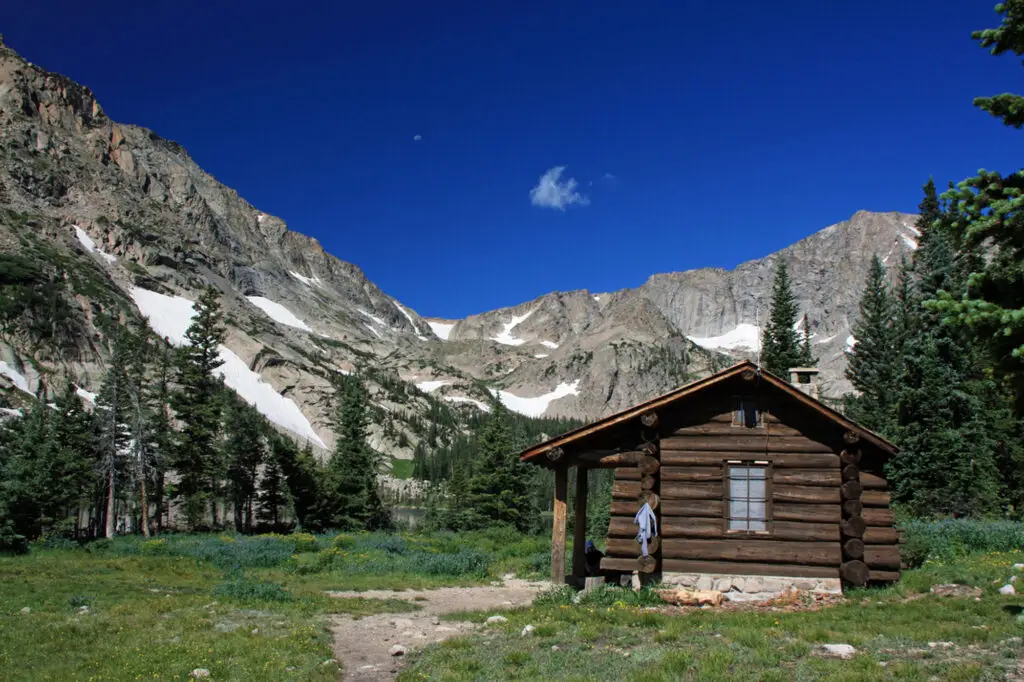
Yes, log homes hold their resale value, and a well-built, well-maintained log home on good land often appreciates right alongside comparable conventional houses. Resale value in log construction is driven by four things: build quality, setting, maintenance history, and the size of the local buyer pool. Get those right and the home sells at a premium; neglect any one of them and the discount shows up fast. Frontier Log Homes has handcrafted log homes in Montrose, Colorado since 1977, and we have watched our early homes resell for far more than they cost to build.
If you’re thinking about buying or building a log home, one question usually comes up pretty quickly: Do log homes hold their resale value?
The short answer is yes, but, as with most real estate decisions, it depends on a few key factors.
From years of experience building and working with log homes, one thing is clear: when they’re built well, placed in the right setting, and properly maintained, log homes can absolutely hold their resale value and often appreciate right alongside traditional homes. In some cases, they even outperform them.
There’s something about a log home that just sticks with people. The craftsmanship, the character, the connection to nature. It creates a different kind of buyer demand, and that demand plays a big role in long-term value.
What the Data Says About Log Home Resale Value Over Time
Let’s talk numbers for a second.
While there isn’t a large dataset that specifically isolates log homes, we can look at the markets where they’re most common. That includes lakefront, mountain, and rural recreational properties.
Here’s what recent data shows:
- Lakefront homes appreciated around 3.5% to 5% annually, compared to 2% to 3% for nearby conventional homes [1]
- Log-style cabins in mountain areas often sell for 10% to 20% higher prices than comparable non-log homes [2]
- Rural and recreational properties tracked about 1% to 2% above national averages in recent years [3]
What does that mean in plain English?
It means that the environments where log homes thrive tend to be strong performers.
More importantly, they attract a specific type of buyer. Someone who isn’t just looking for square footage, but for a lifestyle. That kind of demand helps support pricing over time.
How Log Home Appreciation Compares to Conventional Homes
One of the biggest misconceptions is that log homes appreciate differently than traditional homes.
In reality, they often track very similarly.
The difference comes down to uniqueness. Log home buyers are a very niche market.
Also, in a neighborhood full of similar houses, value is driven by comps. But in a setting where homes vary more, a well-designed log home can stand out in a big way.
That uniqueness can work in your favor.
If your home offers something others don’t, like a view, quality materials, a handcrafted feel, or a strong connection to the landscape, buyers are often willing to pay a premium.
Whether log homes hold their resale value usually comes down to whether the home’s story and setting outperform nearby conventional construction in terms of character and livability.
Factors That Strengthen Log Home Resale Value
Not all log homes are created equal. The ones that hold value the best tend to share a few common traits.
Location, Setting, and Land
Location is still king, even with log homes.
Properties with mountain views, lake access, or wooded privacy naturally attract more buyers. But it’s not just about the scenery.
Accessibility matters too.
- Is the home easy to get to year-round?
- Are there nearby towns, trails, or amenities?
- Is the land usable and well-positioned?
These details shape how people experience the home, and that experience directly impacts value.
Build Quality, Wood Species, and Log Profile
This is where craftsmanship really shows.
Buyers notice things like:
- Tight joinery
- Consistent log profiles
- Proper sealing and structural integrity
Quality materials and thoughtful construction don’t just look better, they perform better over time. And that performance builds confidence for future buyers.
Maintenance History and Exterior Condition
Here’s the truth: log homes require maintenance and consistency.
A well-cared-for log home should show:
- Clean, intact stain
- Healthy chinking and sealants
- Proper drainage and water management
When buyers see a home that’s been maintained properly, it removes a lot of hesitation. That alone can protect your resale value.
Unique Features That Buyers Pay a Premium For
Finishes that blend rustic and refined consistently stand out. This is where log homes really shine.
Features that tend to stand out include:
- Large stone fireplaces
- Vaulted ceilings
- Covered porches
- Big window walls
Add in modern upgrades like energy-efficient systems or smart layouts, and you’ve got a home that feels both rustic and refined.
That combination is powerful in the market.
What Can Hurt a Log Home’s Resale Value
Just like anything else, some things can work against you. The good news? Most of them are preventable.
Deferred Maintenance and Structural Issues
The biggest red flag for buyers is neglect.
Things like peeling stain, water damage, or failing chinking can quickly raise concerns.
Even small issues can create doubt if they start to stack up.
Keeping records of maintenance, repairs, and inspections can go a long way in easing those concerns.
Limited Buyer Pool in Certain Markets
Log homes don’t appeal to everyone. While this often means you have less competition, in some areas, it can also mean fewer buyers.
That doesn’t make them a bad investment, but it can affect how quickly the home sells.
Pricing it correctly and presenting it well becomes even more important in these situations.
Financing and Appraisal Challenges
Because log homes are less common, appraisers sometimes struggle to find comparable sales.
That can lead to conservative valuations.
You can help offset this by providing:
- Build details
- Upgrade lists
- Maintenance records
The more information you give, the easier it is for lenders and appraisers to understand the home’s true value.
Log Homes as Rental or Vacation Investment Properties
This is where things get really interesting: log homes tend to perform exceptionally well as vacation rentals.
Why? Because they offer something different. Guests aren’t just booking a place to stay. They’re booking an experience.
Short-Term Rental Income Potential
In destination markets, log cabins often dominate the rental landscape.
Data shows:
- Smaller cabins (2 to 3 bedrooms) can generate $40,000 to $80,000 annually [4]
- Larger cabins (5+ bedrooms) can bring in $140,000 to $250,000 or more [4]
- Luxury properties can exceed $500,000 annually in strong markets [4]
That’s a big difference, and it reflects the demand for unique, group-friendly spaces.
How Rental History Affects Resale Price
A strong rental history can actually increase your home’s value. Buyers love seeing proof of performance.
If you can show:
- Consistent revenue
- Positive guest reviews
- Organized operations
You’re not just selling a home. You’re selling an income-producing asset.
Log Home Investment: Advantages and Trade-Offs
Like any investment, log homes come with both upsides and responsibilities.
The Advantages
- Strong visual appeal and uniqueness
- Loyal buyer demand
- Potential for premium pricing
- Excellent rental performance in the right markets
The Trade-Offs
- Ongoing maintenance requirements
- Potential appraisal challenges
- Insurance considerations in some regions
The key is planning for these factors from the start. When you do that, they become manageable rather than overwhelming.
How to Protect and Maximize Your Log Home Resale Value
If you want your home to hold its value long term, focus on the fundamentals.
Start with smart design:
- Proper drainage
- Roof overhangs
- Climate appropriate materials
Then stick to a maintenance routine:
- Regular cleaning
- Scheduled staining
- Sealant and chinking checks
- Pest prevention
And most importantly, document everything. Buyers trust what they can see on paper.
Upgrades also matter. Investing in energy efficiency, better windows, or modern systems can improve both comfort and resale appeal.
Is a Log Home the Right Long-Term Investment for You?
So, let’s circle back to the original question: do log homes hold their resale value? Yes, they can. And often, they do.
But like any home, it comes down to three things:
- How well it’s built
- Where it’s located
- How well it’s maintained
If those pieces are in place, a log home can be more than just a place to live. It can be a strong long-term investment with durable resale value.
And for many people, the lifestyle that comes with it makes that investment even more worthwhile.
Resale Value by Log Home Type
Not every log structure resells the same way. Handcrafted homes built from full-diameter logs tend to hold resale value best because the material and the labor behind them cannot be reproduced cheaply. Machine-milled kit homes hold value well when the assembly was done properly, though they compete with newer kits on price. Log-sided or hybrid homes usually track the conventional market in their area, because appraisers treat them as framed houses with a wood exterior.
Half-log siding over stick framing is the weakest performer of the group for resale value, since buyers who specifically want log construction can tell the difference in about ten seconds. If the log look is the reason you are buying, pay for real logs. Our comparison of machine-milled versus handcrafted logs explains why the two age differently.
How Appraisers and Lenders Read Log Homes
Appraisal is where resale value becomes a number on paper. An appraiser needs comparable sales, and in thin rural markets there may be only a handful of log sales within a reasonable radius. That forces adjustments, and adjustments introduce uncertainty. The practical fix is documentation: keep your plans, engineering, permits, inspection records, and maintenance receipts in one file and hand a copy to the appraiser.
Lenders care about the same paperwork. A home with a clear permit history and a documented maintenance record is easier to finance, and easier financing widens your buyer pool, which directly supports resale value. Homes built without permits are the opposite: they can be nearly unfinanceable, which strips the log premium out of the price. The I-Codes your county adopted are the standard your records should demonstrate.
The Maintenance Record Buyers Actually Ask For
Deferred maintenance is the fastest way to destroy log home resale value, because a buyer sees stain failure and immediately imagines rot they cannot see. Keeping a simple log book solves it. Record every time the exterior was washed, stained, or sealed, every chink or caulk repair, every roof and gutter service, and any borate or pest treatment, with dates and product names.
Two documents carry the most weight at resale: a recent moisture reading on the walls that face weather, and a stain history showing the exterior was refreshed on schedule rather than after it failed. Our guides on treating a log home exterior and seasonal maintenance cover the schedule itself.
Log Home Resale Value FAQ
Do log homes appreciate as fast as regular houses?
In most mountain and lakeside markets, yes. Log homes track or slightly beat conventional appreciation when they are well maintained, and they trail it when maintenance has been deferred.
What hurts log home resale value the most?
Failed stain and sealant, visible rot at sills and log ends, unpermitted additions, and a poor site with difficult year-round access. Each one shrinks the buyer pool.
Are log homes harder to sell?
They sell to a smaller but more motivated audience. Time on market can run longer than a comparable subdivision house, while the eventual sale price often carries a character premium.
Does a log home cost more to insure at resale?
Sometimes. Carriers price on replacement cost, and handcrafted logs are expensive to replace. Providing your build documents and a wildfire mitigation plan usually improves the quote.
How much does maintenance affect resale value?
Enormously. A documented maintenance history is the single cheapest way to protect resale value, and it typically costs a fraction of a percent of the home value each year.
Do log home kits resell as well as custom log homes?
Well-assembled kits resell strongly, but a handcrafted custom log home usually holds a higher resale value because the craftsmanship cannot be duplicated by a newer kit at a lower price.
Is a log home a good investment for short-term rental income?
Log homes book well because guests seek the experience. Strong rental history helps resale value with investor buyers, though heavy rental wear can hurt it with owner-occupant buyers.
Protect Your Log Home Resale Value From Day One
The best resale value decisions happen before the first log is set: a buildable site with year-round access, a plan sized to real life rather than to a square footage target, proper roof overhangs, and details that manage water. Frontier Log Homes has been handcrafting log homes and log home kits in Montrose, Colorado since 1977, and we design for the day you sell as well as the day you move in.
Contact us to talk through your site and your plans, browse our log home kits, or read how long log homes last to see why the good ones keep their value for generations.
References
[1] LakeHomes.com Market Data Reports, 2023 to 2025
[2] National Association of Realtors and CoreLogic Housing Data, 2023 to 2025
[3] Rural and Recreational Property Market Trends, 2024 to 2025
[4] AirDNA Short Term Rental Market Data, Smoky Mountains Region
Curious how they feel about the finished result? Read what homeowners say about their finished log homes.
Homes designed for their site hold value better than catalog plans dropped onto a lot. See what custom log home design produces.