
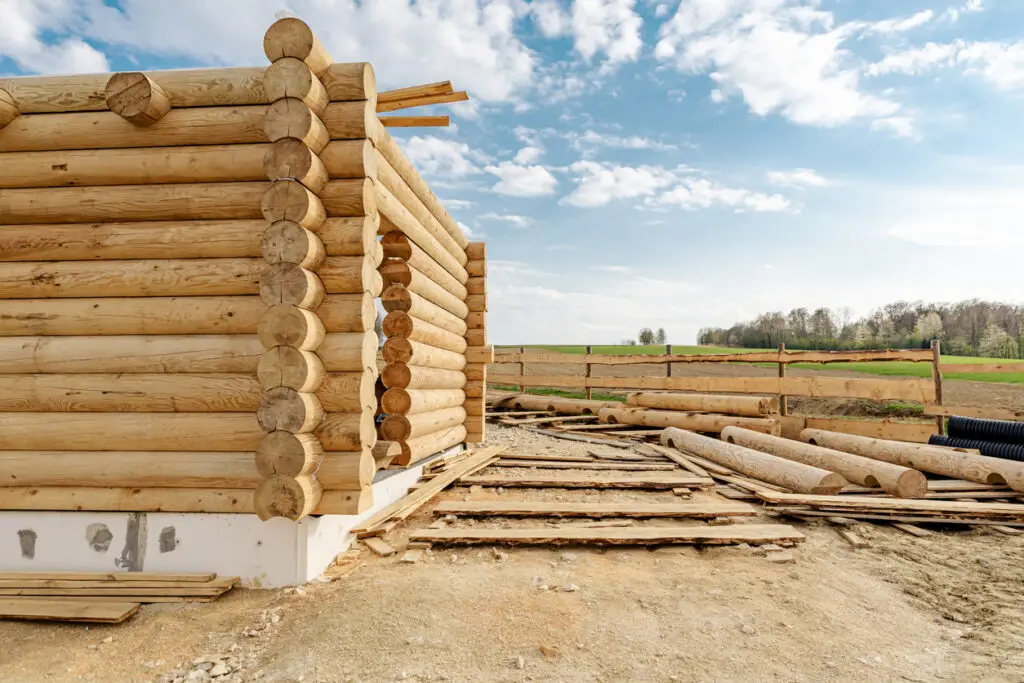
The biggest hidden costs in log home building are almost never the logs. They are site work, utilities, permits, and mid-project design changes. Set aside 15% to 25% beyond your log package for them and a log home building project stays on schedule instead of stalling halfway through. Below are the real log home building cost components, the five mistakes that blow budgets most often, and the expenses owners forget until the invoice lands.
Sticker shock rarely comes from the logs. It comes from everything around them: site work, utilities, and design choices that quietly snowball. If you want clarity on log home building costs, you need a full-picture plan that combines realistic ranges, clear allowances, and a build method that matches your time, skills, and risk tolerance.
At Frontier Log Homes, we’ve crafted custom cabins for decades and seen budgets succeed when owners plan beyond the shell.
Log Home Building Methods and Their Cost Implications
Your build method is one of the biggest levers in total log home building costs. Pick the approach that fits your skills, timeline, and tolerance for project management. At Frontier Log Homes, we offer flexible paths matching your budget and desired level of involvement.
Before diving into specific costs, understand which approach fits your situation. Different methods suit different buyer profiles based on budget structure, involvement level, timeline, customization needs, and maintenance preferences.
Kit-only paths rarely work if you have fewer than 10 hours per week for project management or lack construction coordination experience.
Turnkey maximizes convenience and reduces owner risk but carries the highest initial investment.
Hybrids excel when you want creative freedom, are mixing logs, timber, stone, and modern materials without kit constraints.
Log Cabin Kits: Pre-Cut Package Costs
- Best for: Budget-conscious DIYers or contractors seeking savings; skilled builders with 6+ months available
- Hidden cost risk: HIGH (you own all scheduling/coordination; often double or triple kit price)
- Timeline: Fastest site assembly (weeks for skilled DIY with pre-cut parts), but slower overall project
- Involvement: High hands-on work or contractor coordination required
- Maintenance: Higher potential upkeep needs
Log cabin kits simplify planning by delivering pre-cut walls and roof structures to your site. Typical packages run $25,000–$120,000, often translating to $50–$150 per sq ft for the shell stage. Shipping is a separate line item based on mileage and log volume, and finishing still requires trades, inspections, and coordination.
Frontier offers full assembly service with our skilled crew and crane, or consulting supervision if you want your GC or crew to handle labor and equipment. Kit fabrication typically takes 1 to 13 weeks, depending on design and size.
Turnkey Log Home Building
- Best for: High-budget buyers wanting no surprises; busy professionals or remote builds
- Hidden cost risk: LOW (bundled pricing)
- Timeline: Predictable full build
- Involvement: Zero buyer labor
- Maintenance: Lowest (optimized systems
Turnkey offers maximum convenience, bundling management, trades, and inspections into a single contract. Turnkey cabins generally fall around $125–$275 per sq ft. Frontier offers fully managed turnkey construction within about a 90-minute radius of Montrose, Colorado, acting as your general contractor from excavation to final walkthrough.
Custom and Hybrid Builds
- Best for: Experienced owners guiding custom teams; customization seekers balancing cost with uniqueness
- Hidden cost risk: MEDIUM (bespoke materials and complex integration)
- Timeline: Longer (1–4 months build time) due to custom sourcing
- Involvement: Professional oversight for material integration
- Maintenance: Lower with modern materials
Fully custom log homes give you the most design freedom, from unique layouts to custom finishes and structural details. Most custom solid log homes typically fall in the $100 to $250 per sq ft range, depending on complexity and materials.
Hybrid builds take a more flexible approach. Many homeowners use a kit for the main structure, hire professionals for major systems like plumbing and electrical, and complete some interior work themselves. This can bring total costs closer to $50 to $150 per sq ft, but it requires good planning, coordination, and realistic expectations about time and effort.
Major Cost Components in Log Home Building
Every log home budget breaks down into a few main categories. Understanding where your money typically goes makes it much easier to plan realistically and avoid surprises later.
Log Package and Materials
This includes the logs themselves, plus major materials like roofing and porches. Altogether, these usually make up about 25–30% of the total cost of a log home. The type of wood you choose, log size, and any special treatments can all shift this number. For basic log shells, pricing often falls around $70–$92 per square foot, with premium species or kiln-dried logs increasing the cost.
Foundation and Site Preparation
Your foundation and site work typically account for around 10–12% of total construction costs, but this can vary a lot. Soil conditions, slope, access, and frost depth all play a role. Many kit-only buyers are surprised to see $55,000–$70,000 or more go toward excavation, grading, and foundation work, especially on remote or uneven lots.
Shell Construction and Assembly
This covers the labor and equipment needed to assemble the log structure on site. On average, shell construction represents about 20% of total costs. More complex designs—such as multiple rooflines, large spans, or many corners—increase crane time, labor hours, and overall cost.
Interior Finishing and Systems
Interior work is one of the largest budget categories, usually taking up around 20–25% of total costs. This includes flooring, cabinets, tile, plumbing, electrical, and fixtures. These choices have a huge impact on your final price. With turnkey builds, these costs are typically bundled into your contract. With kits, you’ll need to budget and manage each trade separately.
Exterior Completion
Exterior finishes like windows, doors, roofing, decks, and porches usually make up around 10–12% of the budget. These features add both curb appeal and functionality, but they can also add up quickly. Defining your exterior scope early helps prevent last-minute budget stress.
5 Log Home Building Mistakes That Blow Budgets
The biggest budget failures come from underestimating what lives outside the kit. Here are the five most common traps and their typical cost impacts based on industry data and builder experience.
Mistake #1: Ordering the kit before the site is fully assessed
Impact: $1,500–$5,100+ in excavation and grading overruns, with challenging terrain requiring leveling for stable building sites. Remote or sloped lots often reveal rock, unsuitable soil, or drainage issues that demand engineered solutions.
What we recommend: Get a professional site assessment, including soil tests, grade calculations, and utility routing before ordering materials. Budget an extra 15–20% for site work if you haven’t walked the property with an excavator.
Mistake #2: Underestimating permit and survey requirements
Impact: $500–$2,000 for permits plus $800–$5,500 for surveys, arising from local regulations, zoning checks, or property line disputes not anticipated early. Jurisdictions vary wildly in requirements and timelines.
What we recommend: Contact your building department in the design phase, not after ordering materials. Factor in engineering stamps, septic permits, and utility connection fees separately from the general permit.
Mistake #3: Choosing foundation type without understanding soil conditions
Impact: $5–$37 per sq ft (e.g., $7,500–$55,500 for 1,500 sq ft), escalating with basements ($20–$37/sq ft) or crawl spaces ($6–$18/sq ft) over basic slabs due to soil issues or utility access needs. Frost depth requirements in northern climates often force deeper, more expensive solutions.
What we recommend: Match foundation type to your site’s reality, not your wishlist. A slab works great on stable, level ground. Slopes or wet soils may require piers or a full basement, whether you wanted one or not.
Mistake #4: Making design changes mid-project
Impact: $10,000–$50,000+ from alterations like complex rooflines, extra corners, or custom features requiring re-engineering and materials. Even small changes cascade through schedules, trades, and inspections.
What we recommend: Finalize your floor plan before fabrication starts. Changes after cutting begins can waste materials and delay delivery. Lock critical decisions like window placement, roof pitch, and porch dimensions early.
Mistake #5: Underbudgeting log finishing and weatherproofing
Impact: $2–$5/sq ft for sealing ($3,000–$7,500 for 1,500 sq ft) or $30–$100+/sq ft for premium logs, triggered by upgrades to cedar or pine quality, weatherproofing needs, or supply delays. Staining, chinking, and UV protection are non-negotiable for longevity.
What we recommend: Include stain and sealant in your initial budget, along with a maintenance schedule. Plan for re-staining every 3–5 years, depending on exposure and climate.
Key Factors That Impact Your Log Home Building Budget
Beyond common mistakes, five variables drive most cost-per-square-foot figures: plan complexity, wood species, site conditions, finish level, and permitting.
Design Complexity and Floor Plan
Every extra corner, dormer, and valley adds labor and materials. Simple rectangles with straightforward roof systems lower per-square-foot costs, shorten schedules, and reduce change-order risk. Stock or lightly modified plans also minimize design fees and engineering hours.
Log Type and Wood Species Selection
Species choice shapes both upfront cost and long-term performance. Eastern White Pine sits at the low end of material costs, Douglas Fir trends toward the low to medium range, and Western Red Cedar carries a medium-to-high premium for durability.
Location and Site Conditions
Remote access, steep grades, long driveways, and utility distance increase construction costs. Wet soils or deep frost lines increase excavation and concrete work costs. Wildfire or high-wind zones may require upgraded engineering and materials to meet code.
Customization Level and Finish Quality
High-end windows, exposed timbers, stonework, and designer kitchens quickly raise costs. Decide where to splurge and where to save. We often recommend picking one or two statement features, then selecting durable, cost-effective finishes elsewhere.
Building Codes and Permit Requirements
NAHB’s latest survey shows that construction costs now account for 64.4% of a new home’s sales price, underscoring the need to capture all soft costs upfront. Frontier’s team works with building officials nationwide to streamline approvals without compromising design.
Hidden Log Home Building Expenses Owners Miss
Site Development Beyond Basic Preparation
Driveways, drainage, culverts, and retaining walls add up fast. Tough lots can require engineered solutions and extra trucking. Expect staging areas, crane access, and temporary power to influence schedule and cost.
Utilities Connection and Infrastructure
Well drilling, septic systems, long trenching runs, and power coordination can rival line items inside the home. Kit-only buyers often underestimate utility hookups, which can add tens of thousands beyond the quoted kit price.
Specialty Systems and Features
Radiant heat, whole-home backup power, advanced water treatment, and smart systems are easy to skip in early budgets. Capture these preferences in design so you can size mechanical rooms, panels, and chases correctly.
Long-Term Maintenance Considerations
Plan for staining cycles, chinking touch-ups, pest prevention, and deck sealing to protect your investment. Well-designed overhangs and drainage reduce maintenance frequency and preserve both value and curb appeal.
Next Steps: Planning Your Log Home Build
If you’re weighing log home building costs, start with a realistic range, a clean plan, and the right team. At Frontier Log Homes, our three-step path keeps you on course: set budget and location, create the floor plan and design, then deliver and assemble on site. We offer log cabin kits nationwide, dry-in packages, hybrid solutions, and turnkey builds near Montrose.
Whether you want a small retreat or a legacy home, we’ll help you balance construction costs with the craftsmanship and comfort you expect. Reach out when you’re ready to review plans and prices, compare service levels, and map a build fitting both your vision and your numbers.
Log Home Building Costs: FAQs
What percentage of a log home building budget should be set aside for surprises?
A contingency of 15% to 25% above the log package price is realistic for most projects. Remote sites, steep grades, and long utility runs push that number toward the high end.
Does the log package represent most of the cost?
No. The log shell is typically a minority of the total log home building cost. Foundation, site development, utilities, interior finishes, and mechanical systems usually add up to more than the logs themselves.
What is the single most expensive log home building surprise?
Site development. Access roads, excavation in rock, septic systems, and well drilling can run tens of thousands of dollars and are rarely priced accurately before a proper site assessment.
Is a kit cheaper than a turnkey build?
A kit lowers the up-front price, but you still carry the cost of assembly, foundation, and finishing. Turnkey log home building costs more on paper, but it transfers coordination risk and schedule risk to the builder.
How do I keep log home building costs from creeping up?
Lock the floor plan before ordering, get a site assessment first, set written allowances for finishes, and resist mid-project design changes. Those four habits prevent most overruns.