
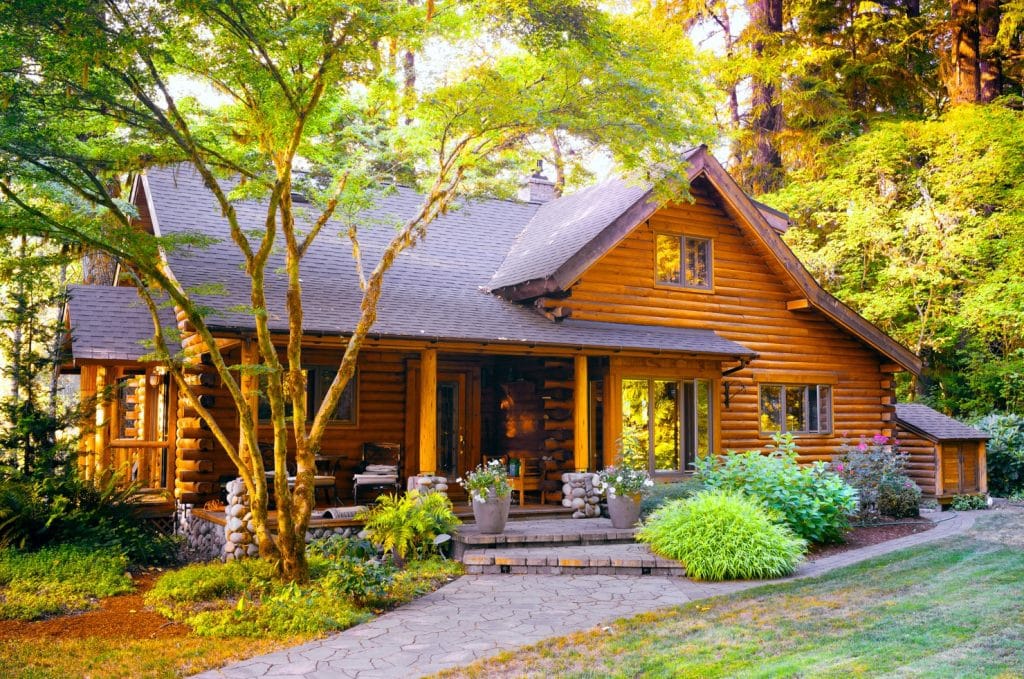
Are log homes healthier than conventional houses? In a few specific, measurable ways, yes: far fewer manufactured materials off-gassing indoors, better humidity buffering, and noticeably better acoustic calm. The honest version of the answer matters, because a log home can also have poor indoor air if it is built or heated badly. Below is what wood genuinely does for you, what it does not, and how to build a log home that earns the claim. Frontier Log Homes has been handcrafting them in Montrose, Colorado since 1974.
| What a log home genuinely helps with | What it does not fix by itself |
|---|---|
| Fewer synthetic materials in the wall assembly | Fresh-air ventilation, which still has to be designed |
| Humidity buffering by exposed wood | Radon, which depends on your soil and foundation |
| Sound damping from mass timber walls | Wood smoke from an old stove or fireplace |
| Stable indoor temperatures from thermal mass | Dust, pollen, and pet allergens |
| Low-VOC sealant and finish options | Mould, if water is ever allowed into the logs |
Are Log Homes Healthier Than Conventional Homes?
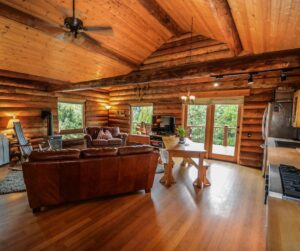
In terms of what the building itself puts into your air, yes. Most of us live surrounded by engineered and processed materials. Logs are a natural material and undergo minimal processing before they become your walls. A conventional house is assembled from cement, steel, gypsum board, engineered sheet goods, adhesives, and foam — each perfectly legal and each contributing something to indoor air, particularly in its first years.
That is the core of why log homes healthier claims hold up: a log wall is mostly one material, and that material is wood. Timber’s natural thermal and acoustic properties come along for free. Where the claim breaks down is anything the logs have no say over, which is the second half of this article.
5 Things That Make Log Homes Healthier
1. Low-VOC Sealants and Finishes
Logs need sealant to keep out water, insects, and mould. Modern low-VOC products — low in volatile organic compounds — release dramatically fewer solvents and gases than the older generation of finishes. You can have thorough chinking, caulking, and exterior stain and still have an interior that is kind to human lungs. Ask for the data sheets and pick the low-VOC option; it is one of the easiest ways to make log homes healthier without spending more.
2. Far Fewer Manufactured Materials
Apart from sealant, caulking, and the insulation in your roof, a log shell is close to being one material. That is a genuine difference from a house built of drywall, adhesives, and composite panels. Wood also stores carbon that the tree removed from the air, and responsibly harvested timber is replanted, so the material has an environmental story most building products cannot tell. Fewer manufactured layers in the wall is quietly what keeps log homes healthier decade after decade. Our notes on eco-friendly log homes and building with recycled materials go further.
3. Humidity Buffering and Air Movement
Exposed wood absorbs moisture when the air is damp and releases it when the air is dry. That buffering keeps interior humidity in a narrower band, which is exactly the band in which dust mites and mould struggle and people feel comfortable. Homes that hold steady humidity lean less on dehumidifiers, humidifiers, and air purifiers — part of what makes log homes healthier in daily practice rather than on paper.
4. Acoustic Calm
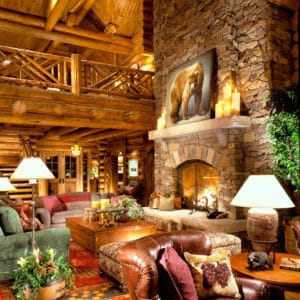
Chronic noise exposure is associated with elevated blood pressure, stress, poor sleep, and cardiovascular strain. Solid wood walls have real mass and excellent damping, so outside noise arrives muted and inside noise does not travel. Owners tell us the quiet is the first thing they notice and the thing they would miss most. If you work from home, it is worth more than any feature you could add later.
5. Steady Indoor Temperature
Log walls store heat and release it slowly, so temperatures swing less between afternoon and dawn. Combined with good roof insulation, that thermal mass means fewer cold drafts in January and less overheating in July. That steadiness, not the wood itself, is what makes log homes healthier to live in through a mountain winter. The U.S. Department of Energy explains how mass and insulation work together, and our guide to log home energy efficiency applies it to log walls specifically.
Where a Log Home Is Not Automatically Healthier
Being straight about the limits is how you actually get a healthy house.
Ventilation still has to be designed. A well-built log home is tight. Tight is good for energy and bad for stale air unless you add mechanical fresh-air ventilation. Nothing makes log homes healthier faster than a designed supply of fresh air, and nothing undoes the advantage faster than skipping it.
Wood heat needs care. A romantic old stove or open fireplace can put fine particulate into your rooms. A modern certified appliance, properly sized and sealed, does not. The EPA Burn Wise programme covers this well, and it matters more to your indoor air than the walls do.
Radon does not care what your walls are made of. It comes up through soil and foundations. Test after you build, and add a passive vent stub during construction if your county has known levels.
Water is the real enemy. Logs that stay wet grow mould like anything else. Deep overhangs, clean gutters, good grading, and regular log home maintenance are what keep log homes healthier in year twenty than they were in year one.
How to Make Log Homes Healthier by Design
Seven decisions do most of the work: specify low-VOC finishes and adhesives throughout; include a balanced mechanical ventilation system; choose a certified, sealed wood-burning appliance if you want wood heat; leave interior wood exposed rather than covering it in film-forming coatings; insulate the roof generously since that is where most heat and moisture move; detail the foundation and site drainage so water never reaches the logs; and use well-dried logs, because stable wood checks less and stays sound. Dry logs are also why the USDA Forest Products Laboratory puts moisture content at the centre of wood durability.
Are Log Homes Healthier? Common Questions
Are log homes healthier for children and pets?
The same factors apply: fewer synthetic surfaces, steadier humidity, and less carpet holding dust. Families who move from a conventional house often notice it first in how their children sleep, which is mostly the quiet doing its work.
Do log homes cause more allergy problems?
Generally the opposite. There is less carpet, less composite sheet goods, and fewer cavities for dust to accumulate in. Exposed log walls wipe down. What you do need is filtration and ventilation, the same as in any tight modern house.
Is the smell of a new log home harmful?
The scent is largely natural terpenes from the wood itself, not solvent. If a new home smells sharp or chemical rather than resinous, that is the finish, and it is a reason to have specified low-VOC products.
Are log homes healthier for people with asthma?
Many owners with respiratory sensitivities report they do better, largely because of stable humidity and fewer synthetic surfaces. That is experience rather than a medical guarantee, and anyone with a serious condition should talk to their physician about their specific triggers.
Does a log home need an air purifier?
Usually far less than a conventional home, because humidity stays steadier and there is less off-gassing. Good ventilation beats any purifier, costs less to run, and does more to make log homes healthier than any appliance you can plug in.
Are log homes healthier in a cold climate?
The advantages are more noticeable there. Thermal mass smooths out temperature swings, and steady warmth without dry, blasting forced air is a large part of why owners say a log home simply feels better in winter.
Does living in one really change your lifestyle?
Honestly, often yes — though the house gets partial credit at best. People who build in the mountains walk more, get outside more, and spend more evenings away from a screen. The setting is doing much of the work, and the log home is what makes you want to be in the setting.
Build a Healthier Log Home With Frontier Log Homes
Instead of a house loaded with synthetic materials, you can have excellent air quality, real acoustic calm, and steady thermal comfort. That is the fair, defensible case for log homes healthier than conventional construction — and it is entirely achievable when the house is designed for it from the start.
We deliver log home kits and build custom log homes nationwide from our Montrose, Colorado assembly yard. Contact Frontier Log Homes online or call 970-249-7130 and enjoy a natural home that is beautiful to look at and wholesome to live in.