

A sloped lot usually costs less to buy and more to build on, while a flat lot costs more up front and less to develop. That single trade explains most of the price difference you see between two parcels of the same size, and it is why the cheaper listing is not always the cheaper house.
Do you want a mountainside view or something closer to open prairie? Aesthetics are only one of the factors worth settling before you buy land. Frontier Log Homes has built on both kinds of ground around Montrose, Colorado since 1977, and here is how the two compare in practice.
Sloped Lot vs Flat Lot at a Glance
| Factor | Sloped Lot | Flat Lot |
|---|---|---|
| Purchase price | Often lower for the same acreage | Higher |
| Site work and foundation | Higher — excavation, retaining, engineering | Lower and more predictable |
| Views | Usually the reason people buy | Depends entirely on surroundings |
| Walkout lower level | Easy and adds cheap square footage | Requires a full basement dig |
| Drainage | Water moves away naturally, but must be managed | Grading needed so water does not sit |
| Driveway and access | Longer, steeper, snow-prone | Short and simple |
| Construction schedule | Longer | Shorter |
Sloped Lot vs Flat Lot: Pros and Cons
Both kinds of ground build beautiful log homes. The differences are about money, schedule, and how much engineering the site demands.
Pros of a Sloped Lot
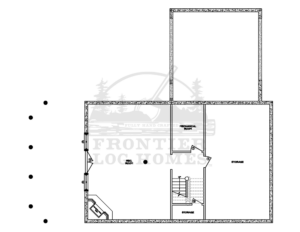 Sloped land is frequently much less expensive than flat land of the same size, precisely because it is harder to build on. It also delivers the views most log home buyers are chasing, and it makes a walkout lower level straightforward — that is finished square footage at basement prices, with real windows and a door to the outside. Water drains away from the house naturally, and a hillside site often gives you privacy that a flat parcel cannot.
Cons of a Sloped Lot
The savings on the land get spent on the site. Expect excavation, possibly retaining walls, an engineered foundation, and a longer driveway. Concrete trucks and cranes need a route in and a place to work. Utilities cost more to run uphill, septic systems need careful placement, and winter access on a steep drive is a genuine consideration in the Rockies. Building on a sloped lot also takes longer, which affects financing costs.
Pros of a Flat Lot
Flat ground is the simplest and most predictable place to build. Foundations are straightforward, the crew works efficiently, equipment gets where it needs to be, and the schedule holds. Driveways are short and plowable. A single-level plan sprawls comfortably, which matters if you intend to age in place. Bids on flat lots also come in tighter, because there are fewer unknowns hiding underground.
Cons of a Flat Lot
You pay more per acre, and you may pay in views. Water does not leave on its own, so grading, gutters, and sometimes drains are required to keep moisture away from the log walls. A basement means digging a hole rather than using the grade you already have. And on truly flat open ground, wind exposure and lack of natural screening can both be issues.
How to Judge a Sloped Lot Before You Buy
Six things tell you almost everything about what a hillside parcel will cost to develop.
1. Measure the Actual Grade
A gentle five to fifteen percent slope is often ideal — enough for a walkout, not enough to require heroics. Past about twenty-five percent, costs climb quickly and engineering becomes mandatory.
2. Check Access for Heavy Equipment
 Concrete trucks, log delivery trailers, and a crane all have to reach the building site. If the driveway cannot be built at a workable grade, everything else is academic. This is the item that most often kills an otherwise perfect sloped lot.
3. Find Out What Is Under the Soil
Rock raises excavation costs dramatically; expansive clay changes the foundation design. A soils report before purchase is cheap insurance, and lenders on a sloped lot frequently require one anyway.
4. Locate Water, Septic, and Power
Well depth, leach field placement, and the distance to the nearest power drop are real numbers you can get before closing. On a hillside, septic often has to sit below the house, which constrains where the house can go.
5. Watch Where the Water Goes
Walk the parcel during a storm or spring melt if you can. Uphill drainage has to be intercepted and routed around the building, and construction-phase runoff is regulated under the EPA’s stormwater rules for construction sites.
6. Confirm Setbacks, Slope Rules, and Codes
Many counties restrict building on steep grades or require additional engineering above a certain percentage. Those provisions come from the codes your jurisdiction adopts from the International Code Council, so check with the building department before you make an offer.
The Cost Differences That Surprise Buyers
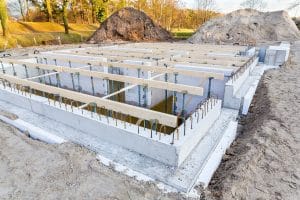 Three line items catch people out on a sloped lot. The first is the driveway, which can cost as much as a room. The second is retaining and shoring, which is invisible in the finished house. The third is the foundation itself — a stepped or walkout foundation involves more concrete, more forming, and usually a structural engineer.
On the other side of the ledger, the walkout lower level often returns more finished space per dollar than anything else in the budget. That is why a well-chosen sloped lot can still be the better overall value. Our pages on log cabin foundations and log cabin home cost show how these pieces fit together, and places to build log cabins covers regional considerations.
Frequently Asked Questions About Sloped and Flat Lots
How steep is too steep to build on?
Above roughly twenty-five to thirty percent grade, most sites require significant engineering, retaining structures, and specialized access. It can be done and it is rarely cheap. Under fifteen percent is the sweet spot.
Does a sloped lot always mean a basement?
No, but it usually makes one worth building. A walkout lower level on a hillside costs far less per square foot than adding the same space above grade, so most of our clients take advantage of it.
Is a flat lot cheaper to build on overall?
Site work and foundation costs are typically lower, yes. Whether the total project is cheaper depends on what you paid for the land and whether you would have built a basement anyway.
Do log homes need special foundations on a slope?
The foundation is engineered for the site, not for the logs. What logs add is weight and the need for a level, accurately dimensioned bearing surface, which makes survey and formwork accuracy more important than usual.
What about snow and ice on a steep driveway?
Plan for it before you buy. Grade, aspect, and length all matter — a north-facing drive holds ice for months. Heated aprons, gravel turnouts, and a realistic plow plan are part of the true cost of a steep sloped lot.
Will a sloped lot delay construction?
Usually by weeks rather than months, mostly in excavation, foundation, and engineering review. Building through a mountain winter can extend that further.
Can you build a single-story home on a slope?
Yes, either by cutting a level bench into the hillside or by stepping the foundation. Both add cost, and both work. A bench also creates the flat outdoor space a hillside otherwise lacks.
Talk Through Your Lot With Frontier Log Homes
Once you have made the big decision to build, the land comes next — and we are happy to walk a parcel with you before you buy it. Frontier Log Homes has built on benches, hillsides, and open valley floor around Montrose, Colorado since 1977.
Look at our log cabin kits, read about our general contracting work, or contact us with the parcel you are considering.