
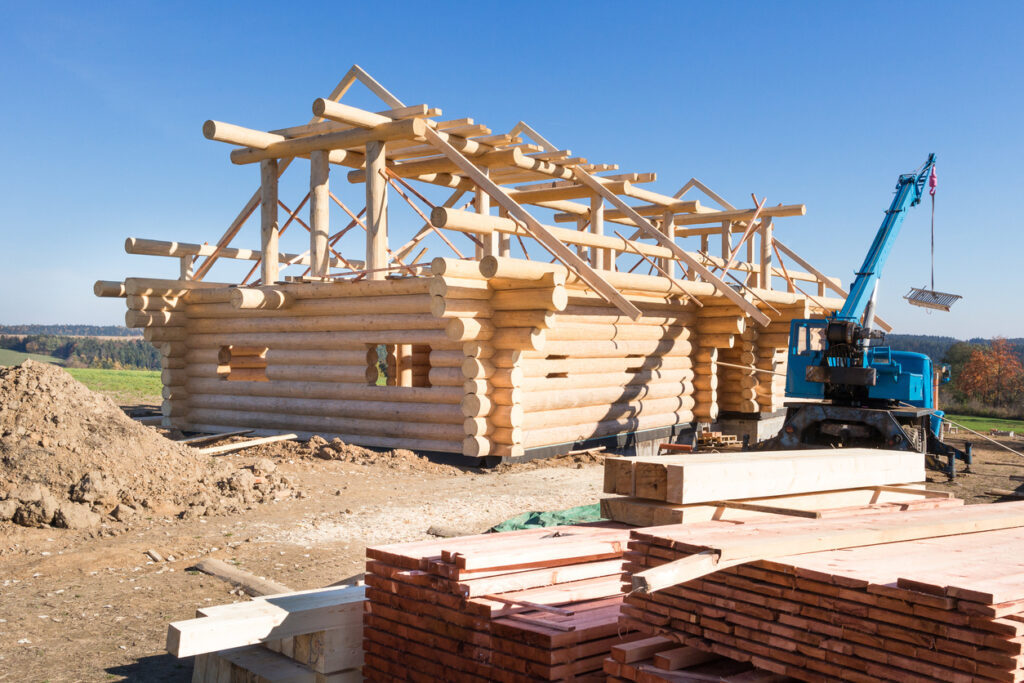
Modular log homes in Colorado are usually sold on one number: the factory price. That number is real, and it is also about half of what the finished house costs. The other half is site work, foundation, crane, transport, utilities, and the finish work the factory does not do.
None of that makes modular a bad choice. It makes the brochure comparison a bad comparison. Here is what actually differs.
Key Takeaways
- The factory price is not the house price. Site work, foundation, transport, crane, and finish often equal or exceed it.
- Mountain terrain narrows the modular advantage. Module transport needs road width, grade, and turning radius most Western Slope driveways do not have.
- Speed is real, but it applies to one phase. Design, permitting, and site work run the same length either way.
- Design freedom is where modular actually costs you. Module dimensions constrain spans, ceilings, and rooflines.
- Compare finished cost, not delivered cost. Anything else is comparing a kitchen to a grocery bill.
What This Guide Covers
- Modular, manufactured, prefab, and kit are four different things
- Six costs the brochure leaves out
- Modular versus custom, side by side
- Why Western Colorado terrain changes the math
- When modular is genuinely the better call
- How Frontier Log Homes approaches it
- Frequently asked questions
Modular, Manufactured, Prefab, and Kit Are Four Different Things
These get used interchangeably in advertising. They are not the same, and lenders, appraisers, and building departments treat them differently.
| Type | What It Is | Code It Is Built To |
|---|---|---|
| Modular | Volumetric sections built in a factory, craned onto a permanent foundation | Same building code as site-built |
| Manufactured | Built on a permanent steel chassis, transported whole | Federal HUD code, not local building code |
| Panelized or prefab | Wall and roof panels shipped flat, assembled on site | Same building code as site-built |
| Log home kit | A numbered log package plus plans; you supply everything else | Same building code as site-built |
The distinction matters for financing and resale. Manufactured homes on HUD code appraise and finance differently than modular homes on local code. If a salesperson blurs the two, slow down.
Six Costs the Brochure Leaves Out
These are the line items that separate a modular quote from a finished house. On modular log homes in Colorado, they are also the ones that move the most.
- Site work and access. Grading, driveway, drainage, and utility trenching. On a mountain parcel this can be the largest single line item.
- Foundation. Engineered, poured, inspected, and sized for your snow and soil conditions. Modules do not change what the ground requires.
- Transport. Priced by distance, permits, escorts, and route difficulty. Colorado mountain routes add all four.
- Crane and set day. A crane large enough to place modules needs a staging pad and clear access. Difficult sites need a bigger crane, which needs more room.
- Button-up and finish. Marriage lines, roof tie-ins, siding transitions, mechanical connections, and interior finish at every seam.
- Design constraints you pay for later. Module widths cap room dimensions and ceiling heights. Working around them costs more than designing without them.
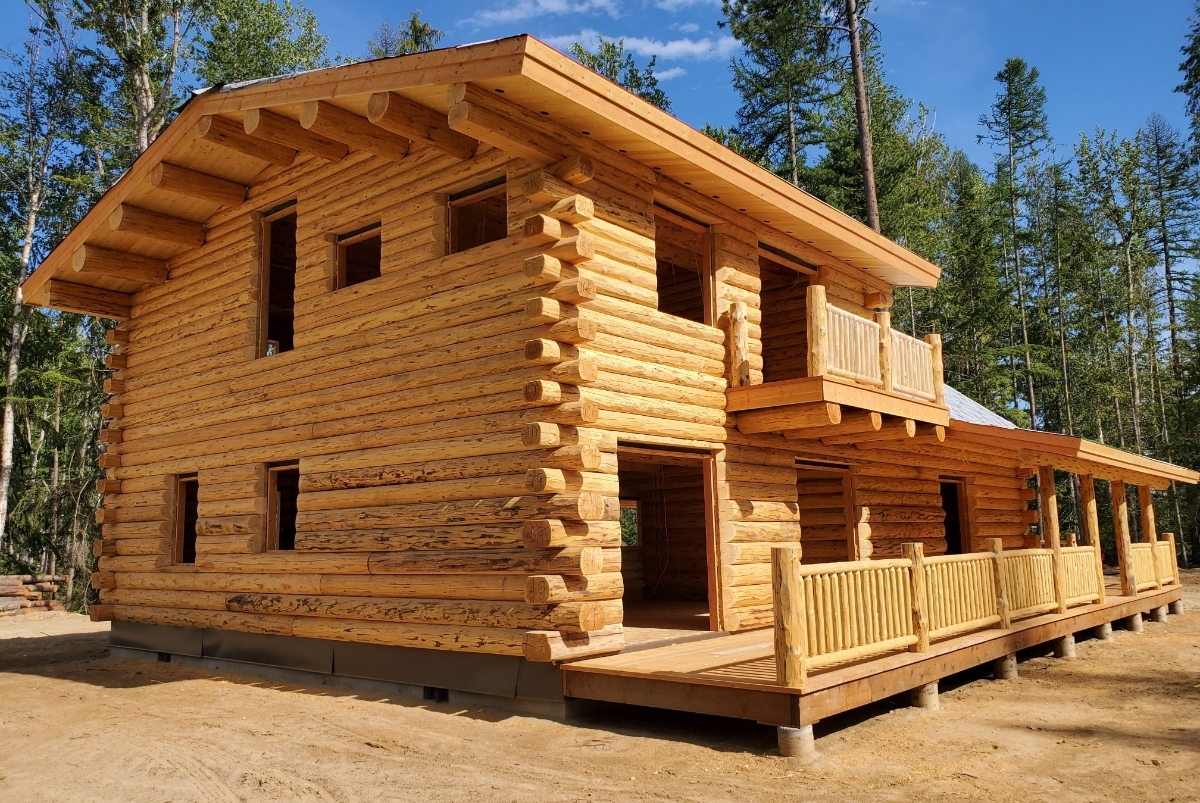
Modular Versus Custom, Side by Side
| Dimension | Modular | Custom Site-Built |
|---|---|---|
| Design freedom | Constrained by module width, height, and transport limits | Constrained only by structure, budget, and code |
| Construction speed | Faster once modules are built; design and permitting unchanged | Longer on site, same design and permitting window |
| Weather exposure | Less, since modules are built indoors | More, which is why dry-in timing matters |
| Difficult sites | Poor fit where transport and crane access are limited | Adapts to steep, remote, and constrained parcels |
| Log and timber options | Limited; full-log walls are rarely modular | Full log, hybrid, and timber frame all available |
| Change during build | Very difficult once the factory run starts | Possible, priced through change orders |
| Cost certainty | High on the module, low on everything else | Set by the completeness of the drawings |
Why Western Colorado Terrain Changes the Math
Modular economics assume an efficient route from factory to foundation. Western Colorado frequently does not provide one, which is the single biggest constraint on modular log homes in Colorado.
Modules travel wide and tall. They need road width, gentle grades, generous turning radii, and clearances. A driveway that switchbacks up a hillside, a low bridge, or a tight county road turn can eliminate modular as an option entirely — sometimes after the deposit is paid.
Snow load compounds it. Roof structures rated for high-elevation Colorado loads are heavier, which affects what can be shipped as a module and what has to be framed on site. Many modular producers ship a low-pitch roof that gets built up after set, which erases part of the speed advantage.
None of this makes modular wrong. It means the comparison has to happen after someone has looked at your actual parcel. Our guide to how custom home design works covers when that evaluation happens.
When Modular Is Genuinely the Better Call
- A flat or gently sloping lot with a wide, direct access road.
- A conventional floor plan you are happy to build largely as drawn.
- A short build season where indoor fabrication buys real schedule.
- A budget where cost certainty on the shell matters more than design freedom.
- A location within reasonable transport distance of a producer.
If your parcel meets those conditions, modular log homes in Colorado deserve a serious look. If it meets two of five, run the full finished-cost comparison before committing.
How Frontier Log Homes Approaches It
Frontier Log Homes has designed and built custom log and timber homes out of Montrose, Colorado since 1977. We build on site, and we are direct about why: the parcels our clients own usually cannot take a module, and the homes they want usually cannot be made of them.
That is not a knock on the category. It is a match problem. Modular log homes in Colorado work best on accessible ground with conventional plans. Steep, remote, high-elevation parcels with long spans and heavy snow loads are a different build, and pretending otherwise costs owners money.
What we recommend either way: get a real design phase before you compare anything. Once a permit-ready set exists, a modular quote and a site-built quote finally describe the same house, and you can decide on facts instead of brochures.
For a broader breakdown of construction costs, see our guide to what a log home costs to build. Building code definitions for modular and manufactured housing are published by the International Code Council.
Frequently Asked Questions
Are modular log homes in Colorado cheaper than site-built?
The factory price is lower than a comparable site-built shell, but the finished cost often lands close once site work, foundation, transport, crane, utilities, and finish work are included. On difficult mountain parcels, transport and access costs can erase the savings entirely. Compare finished cost, not delivered cost.
What is the difference between modular and manufactured homes?
Modular homes are built to the same local building code as site-built homes and placed on a permanent foundation. Manufactured homes are built to the federal HUD code on a permanent steel chassis. The distinction affects financing, appraisal, resale, and in some jurisdictions where the home may be placed.
Can you build a full log home as a modular?
Rarely. Full-log wall systems settle over the first several years and require slip joints and settling allowances throughout, which does not translate well to volumetric modules. Hybrid and timber accent packages are more adaptable, but true full-log construction is generally site-built.
Will a modular home fit on a steep mountain lot?
Often not. Modules travel wide and tall and need road width, gentle grades, and turning radius that many Western Colorado driveways cannot provide. A crane also needs a staging area with clear access. Evaluate transport and crane feasibility before paying any deposit.
Do modular homes appraise the same as site-built?
Modular homes built to local code on a permanent foundation are generally appraised as real property comparable to site-built homes. Manufactured homes on HUD code are frequently treated differently. Confirm with your lender and appraiser before you choose, because the financing path differs.
Is modular actually faster?
The construction phase is faster because modules are built indoors while site work proceeds. Design and permitting take the same amount of time either way, and post-set finish work is often longer than buyers expect. Net schedule savings are real but smaller than the marketing suggests.
Let’s Design a Log Home That Fits Your Land, Budget, and Lifestyle
Send us your parcel. We will tell you honestly whether it can take a module, what it would cost either way, and what your land actually supports.