
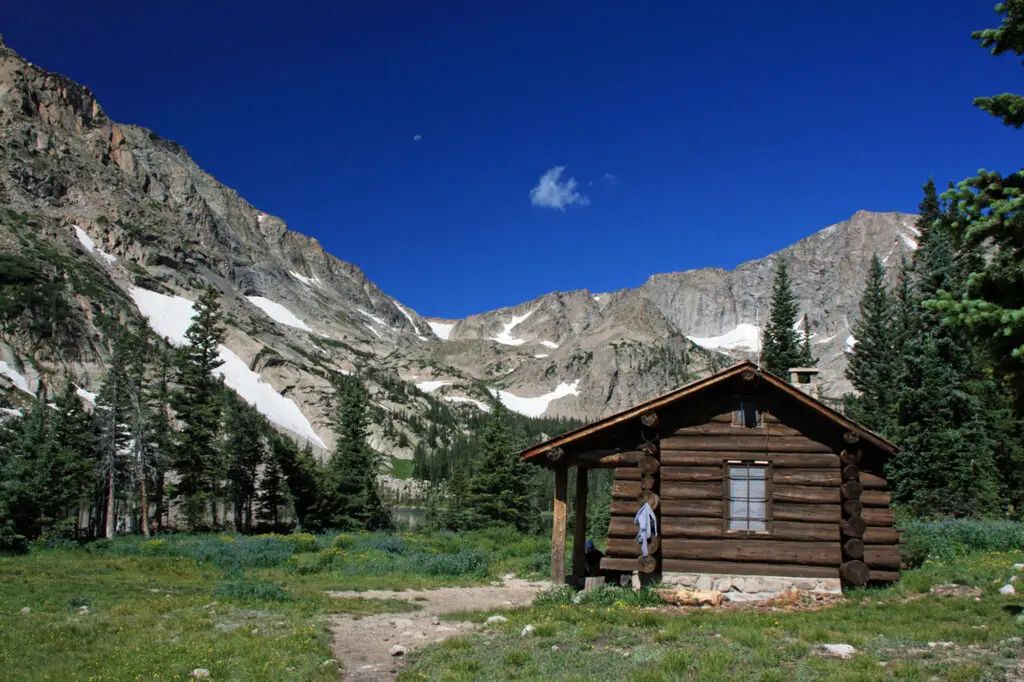
Buying land to build a house is a construction decision before it is a real estate decision. The parcel decides what you can build, how much of your budget disappears before the foundation is poured, and occasionally whether you can build at all. A good view tells you none of that.
This is the checklist we run when a client asks us to look at a parcel before they close. It is written for mountain and rural land, where the gap between what a listing shows and what a site can actually carry is widest.
Key Takeaways
The short version for anyone buying land to build a house:
- Access comes first, not last. A road that cannot carry a concrete truck changes every number downstream.
- Water and septic can cost more than the land on a rural parcel. Confirm both before closing.
- Run these checks during due diligence, while walking away is still free.
- Bring a builder in before you buy. An hour of a contractor’s time is the cheapest insurance in the process.
What This Guide Covers
Each section below is one of the checks we run when buying land to build a house is on the table.
- The 12 Checks When Buying Land to Build a House
- Access: The First Check When Buying Land to Build a House
- Grade, Soils, and What the Ground Will Carry
- Water, Septic, and Power
- Zoning, Covenants, and the Rules You Inherit
- Climate Loads: Snow, Wind, and Wildfire
- Survey, Title, and Water Rights
- Run the Checks in This Order
- Why Bring a Builder Before You Buy
- Start With the Land, Not the Plan
The 12 Checks When Buying Land to Build a House
| # | Check | What kills a deal |
|---|---|---|
| 1 | Legal and physical access | No recorded easement, or a road too steep or narrow for delivery trucks |
| 2 | Grade and buildable area | The flat ground is smaller than it looks, or faces the wrong way |
| 3 | Soils and bedrock | Shallow rock, expansive clay, or fill that forces an engineered foundation |
| 4 | Water | No well permit, low yield, or a shared agreement with restrictions |
| 5 | Septic feasibility | Failed perc test, or a leach field that will not fit the buildable area |
| 6 | Power | Distance to the nearest transformer, and who pays for the line extension |
| 7 | Zoning and setbacks | Setbacks shrink the buildable envelope below what you need |
| 8 | Covenants and HOA | Rules on materials, roof pitch, height, square footage, or outbuildings |
| 9 | Snow and wind loads | Design loads that change the structure and the roof |
| 10 | Wildfire requirements | Ignition-resistant materials, defensible space, access-width rules |
| 11 | Floodplain and drainage | Where water goes in spring, not in August |
| 12 | Survey and title | Unrecorded easements, encroachments, or boundaries that do not match the fence |
Access: The First Check When Buying Land to Build a House

Two different questions hide inside the word access. Legal access is whether you hold a recorded, permanent right to reach the parcel. Physical access is whether a loaded truck can actually get there. A parcel can pass one and fail the other.
Drive the full route in the worst condition you can. Look for grade the trucks cannot climb loaded, switchbacks a long trailer cannot turn, bridges or culverts with weight limits, and width that will not pass a crane. If material has to be shuttled in smaller loads, that cost lands on every phase of the build. On a few of our sites the only way in was by helicopter.
Ask who maintains the road and who plows it. In the mountains an unmaintained road can mean a build window that closes in November.
Grade, Soils, and What the Ground Will Carry
When you are buying land to build a house, slope is the single biggest driver of foundation cost. A gentle grade lets you step a foundation and gain a walkout level. A steep one means retaining walls, deep excavation, engineered footings, and hauling spoil off site.
The listing photo will not tell you where bedrock sits. Shallow rock means blasting or hammering. Expansive clay means a foundation designed to move with it. Undocumented fill means a geotechnical report before anyone draws a plan. See our overview of log cabin foundation options and our comparison of sloped lots versus flat lots.
Water, Septic, and Power
On rural land these three routinely add up to more than buyers expect, and any one of them can end a deal.
- Water. Is there a well permit, and what is the documented yield? A low-producing well limits fixture count and irrigation. Shared wells come with agreements worth reading closely.
- Septic. Get a percolation test during due diligence, not after. A failed perc, or a leach field that will not fit alongside the house and driveway, is the most common reason a parcel does not work. Adding a bedroom later re-rates the whole system.
- Power. Measure the distance to the nearest service. A long line extension is a real number and you usually pay it. Ask the utility for a written estimate rather than a guess.
Zoning, Covenants, and the Rules You Inherit
Setbacks quietly shrink your buildable envelope. On a narrow parcel, front, side, and rear setbacks can leave a footprint far smaller than the acreage suggests. Pull the zoning and draw the envelope before you fall in love with a plan.
Covenants and HOA rules can dictate materials, roof pitch, maximum height, minimum square footage, and whether you may build a shop. Some subdivisions restrict exposed log entirely. Read them before closing, not after. Our guide to navigating building codes covers the permitting side.
Climate Loads: Snow, Wind, and Wildfire
Elevation is easy to overlook when buying land to build a house, and it changes more of the structure than almost anything else on this list. Design snow load is set by your county, and it drives roof framing, member sizes, and sometimes the whole roof geometry. Two parcels twenty minutes apart can carry meaningfully different loads.
Wildland-urban interface requirements are expanding across Colorado mountain counties. They can dictate ignition-resistant roofing and siding, ember-resistant venting, defensible space around the structure, and minimum road widths for fire apparatus. That last one loops straight back to access. See designing for harsh weather and how log homes behave in fire.
Parcel-level data from your county assessor is a useful starting point, but the authoritative answer on design loads and WUI rules comes from the local building department. The International Code Council publishes the model codes most Colorado jurisdictions adopt.
Survey, Title, and Water Rights
Order a current survey before buying land to build a house. Fences are not boundaries. Old easements for utilities, ditches, or a neighbor’s driveway can sit exactly where you wanted the house. In Colorado, water rights are separate from land ownership and do not automatically convey. Ask directly what conveys and get it in the contract.
Run the Checks in This Order
- Before you make an offer: drive the access route, pull zoning and setbacks, read the covenants, check floodplain maps.
- During due diligence: order the survey, run the perc test, confirm the well permit and yield, get a written utility estimate.
- Before you remove contingencies: walk the parcel with a builder, and with a geotechnical engineer if the ground looks uncertain.
- After closing: start design. By then you know what the site will carry, and the plan can be drawn around it instead of adjusted to it.
Why Bring a Builder Before You Buy
Real estate agents sell parcels. Builders price them. Those are different skills, and the second one is what protects you.
A contractor walking the property reads things that never appear in a listing: where a driveway can physically go, where the house should sit for solar gain and drainage, whether a crane can set up, how far material has to be carried, and what the site itself will add to the build before a single wall goes up. We do this regularly for clients who have not bought yet. It is a short conversation, and it has talked people out of parcels more than once.
If the land does work, that same walk becomes the starting point for the design. See how we design custom log homes around your land.
Frequently Asked Questions
What should I check first when buying land to build a house?
Access. When buying land to build a house, confirm first that you have recorded legal access and that the road can physically carry construction traffic. Everything else depends on it, and it is the hardest problem to fix after closing.
Can I get a perc test before I own the land?
Usually yes, with the seller’s permission, and it is worth writing in as a due-diligence condition. A failed percolation test is one of the most common reasons a rural parcel cannot be built on, and you want to know while you can still walk away.
Does a steep lot cost more to build on?
Yes. Slope drives excavation, retaining, engineered foundations, and hauling. It can also deliver a walkout level and better views, so it is not automatically the wrong choice. It just needs to be priced before you buy, not after.
Do water rights come with the land in Colorado?
Not automatically. Water rights are treated separately from land ownership in Colorado. Ask specifically what conveys and get the answer in the contract rather than in conversation.
Should I buy the land before choosing a floor plan?
When buying land to build a house, buy the parcel first, or at least know which one you are buying. A plan drawn for the wrong site gets redrawn and you pay for it twice. Our guide to comparing log home floor plans covers what to look at once the parcel is settled.
Will a builder look at a parcel I do not own yet?
We do it regularly. Reviewing a property before purchase is one of the more useful hours in the whole process, and it costs far less than discovering the problem after closing.
Start With the Land, Not the Plan
Most people buying land to build a house do it in the wrong order. Every difficult build we have been called into started the same way: someone bought a parcel, then went looking for a house to put on it. Reversing that order is the cheapest decision available in the entire project.
Frontier Log Homes has been a licensed general contractor in Montrose, Colorado since 1977, and we walk parcels with people buying land to build a house every season. We review parcels with clients before they buy, and we design and build the homes that go on them.
Thinking about a parcel? Tell us where it is and we will tell you what it can carry. Call (970) 249-7130 or send us the details.