
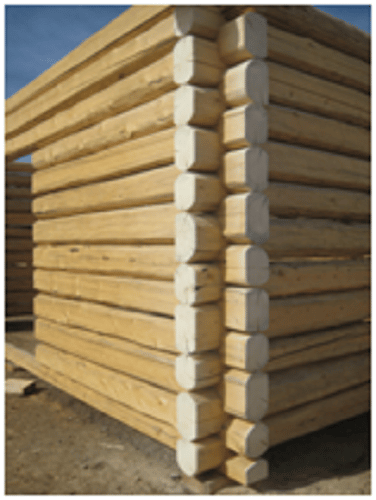
Log home durability comes down to four things: the log species, how well the logs were seasoned, how the home was built, and how it is maintained. Get those right and a log home routinely outlasts the mortgage. Get them wrong and log home durability collapses fast, no matter how good the logs looked on delivery day.
Many people are convinced bricks, masonry, or block-built homes offer the most durability when it comes to building their home. These methods of building involve rocks, which many believe to be secure in construction. Despite these common beliefs, immense force can easily cause these materials to crumble or crack. However, using thick, flexible logs to build your home ensures optimal durability against mother nature.
Log Home Durability and Lifespan
Log home durability is largely a wood science question, and the USDA Forest Products Laboratory has spent a century studying it: kept dry and away from ground contact, structural timber lasts indefinitely. With the right maintenance, a log home stays standing for generations. Some log homes across the world are still standing hundreds of years after they were built! Now, technology has improved and log homes are ready to last a lifetime.
Log Home Durability in a Fire
Despite being the most common fuel for a fire, the full round logs of a log home have proven to have a much higher fire rating than conventional framed homes.
A wall of solid wood keeps the fuel to oxygen ratio at lower levels and eliminates pathways for the fire to spread from one place to another. Also, because of the solidity of a log home wall, the structure itself is stronger and more secure. This helps keep logs from collapsing during a fire.
Log Home Durability in an Earthquake
A log homes durability is proven when tested against earthquakes. When used in construction, other home materials when exposed to the type of stress an earthquake can produce will break or shatter. Because full round logs are wood, they are more willing to bend and mold to the earth as it moves.
Other Natural Disasters
Log homes have been known to be the last structures standing after many different natural disasters and storms. Many times, people have seen steel or stone crumble under the force of a hurricane or tornado, but the nearby log homes stand strong.
Insects and Log Home Durability
Like any home, log homes are victims of many different insects. However, with a log home, you have the ability to specially treat and stain your home’s logs to keep carpenter bees, termites, and other pesky insects at bay. Our guide to carpenter bees and log homes covers the treatment schedule in detail, and the biggest threats to log homes walks through the rest.
The 4 Killers of Log Home Durability
Without proper construction, proper log species, and properly seasoned logs, a log home can go from being durable and attractive, to brittle and rotting in no time.
When using logs that are the wrong species or have not been seasoned correctly, the logs in your walls and roof will shrink in diameter (not properly seasoned), causing damage and loosing the air-tight seal you need for energy efficiency. Logs of the wrong species will settle and compress at a much higher rate, resulting in doors that do not open or shut, drywall breaking and cracking, floors swaying, and many other problems. Poor log selection, faulty construction methods, poor design, and improper maintenance are the four killers of log home durability. Each one is avoidable.
1 – Wrong Log Species
Species differ in density, decay resistance, insulating value, and how much they shrink as they dry. A species that performs beautifully in a dry mountain climate can be the wrong call in a humid one. Choosing for looks alone is the most expensive shortcut in the whole project.
2 – Improperly Seasoned Logs
Green logs keep drying after the walls go up. As they lose moisture they shrink in diameter, the wall settles unevenly, and the air-tight seal you paid for opens up. Kiln-dried or properly air-seasoned logs move far less and hold their joints.
3 – Faulty Construction and Design
Log walls have to be allowed to settle. Settling jacks at posts, slip joints at partition walls, and generous overhangs at doors and windows are not optional details. Wide roof overhangs and a tall foundation keep water off the logs, which does more for log home durability than any finish product.
4 – Neglected Maintenance
Stain and sealant are consumables. Inspect the walls annually, wash them, touch up checks and cracks, and plan on refinishing the weather-facing elevations every three to seven years depending on sun and exposure. Skipping a cycle is how small problems turn into log replacement.
A Simple Log Home Durability Maintenance Schedule
Most owners do not need a complicated plan. They need a consistent one.
- Every spring: Walk the exterior. Look for peeling finish, dark staining, open checks facing upward, insect holes, and sprinklers hitting the logs.
- Every year: Clean gutters, keep grade sloped away from the foundation, and cut back vegetation so air can move along the walls.
- Every 2 to 3 years: Wash the exterior and touch up finish on the sunniest elevation, usually south and west.
- Every 3 to 7 years: Refinish fully, and inspect chinking and sealant joints for separation.
- Anytime you see it: Standing water, ground contact, or a leak. Those three destroy log home durability faster than anything else on this list.
Log Home Durability FAQs
How long does a log home last?
With sound construction and regular maintenance, a modern log home is a multi-generational structure. Log buildings several hundred years old are still standing and in use across Scandinavia, Eastern Europe, and Appalachia.
Are log homes more or less fire resistant than stick-framed homes?
Solid log walls perform well because large timbers char on the outside and retain strength underneath, rather than burning through the way dimensional framing does. The roof, decking, and surrounding vegetation are usually the real risk, which is why defensible space around the home matters more than the wall material.
Do log homes hold up in earthquakes and high winds?
Wood is flexible and light for its strength, which helps in seismic events, and interlocking log walls behave as a single mass. As with any home, the connections to the foundation and roof are what decide the outcome.
What is the biggest single threat to log home durability?
Water. Not fire, not insects. Roof leaks, poor drainage, short overhangs, and sprinklers spraying the walls cause more log damage than every other cause combined, because sustained moisture is what lets decay fungi and insects get started.
How often should a log home be stained?
Plan on every three to seven years. Sun exposure is the deciding factor, so the south and west walls almost always need attention before the rest of the house does.
Ensure your log home is built to stay durable by using Frontier Log Homes! We know how to build your log home right so you don’t have to worry about a dysfunctional structure for your home.