
Climate impact drives four log home decisions: wood species, wall thickness and insulation strategy, moisture detailing, and the settling allowance built into the plan. A cabin designed for humid Georgia and a cabin designed for 9,000 feet in Colorado share almost nothing beyond the logs themselves. Below is the climate impact on each of those decisions, zone by zone, with the species and details that hold up. Frontier Log Homes has handcrafted log homes for high-altitude, cold-dry Colorado since 1977, and we specify for the site rather than for a catalog.
Climate Impact by Zone at a Glance
| Climate Zone | Best Species | Main Threat | Critical Detail |
| Cold and snowy | Eastern white pine, spruce, fir | Snow load and ice dams | Steep roof, deep overhangs, vented assembly |
| High-altitude cold and dry | Lodgepole pine, Engelmann spruce, Douglas fir | UV and rapid drying checks | UV-stable finish, generous settling allowance |
| Humid and rainy | Western red cedar, cypress, redwood | Rot, mold, insects | Tall foundation, wide overhangs, borate treatment |
| Arid and hot | Douglas fir, ponderosa pine, cedar | Checking, shrinkage, fire | Breathable finish, ember-resistant details |
| Mixed and temperate | White pine, cedar, Douglas fir | Freeze-thaw cycling | Continuous air sealing, maintained sealant |
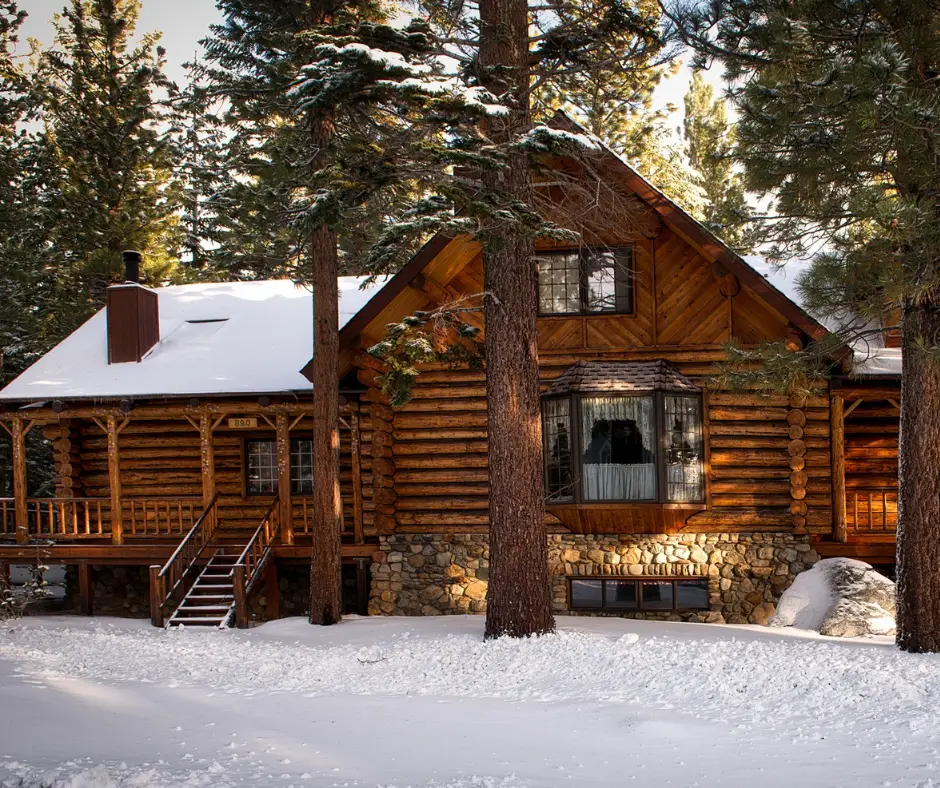
Picture a log home tucked among snowy peaks or beside a quiet, sunlit lake. While the beauty of log homes is undeniable, true longevity begins with thoughtful, climate-aware planning. Different environments bring unique challenges—intense sun, heavy snow, strong winds, or high humidity. These conditions directly impact how a home ages, breathes, and performs.
At Frontier Log Homes, we’ve built over 800 custom log homes across various U.S. climates. Our experience has proven that selecting the right materials and structural designs for specific weather conditions is vital. From roof pitch to log species, every detail matters when building for resilience.
Climate Impact on Log Home Performance
Log homes respond differently to weather than traditional homes. Their performance depends heavily on the surrounding climate. Cold climates demand insulation strategies that retain heat without compromising airflow. In humid regions, moisture resistance becomes a top priority to prevent wood damage.
Hot, dry areas require materials that resist cracking and warping under intense sun. Wind-prone zones require structural reinforcements that enhance stability and safety. Proper planning ensures the home remains strong, efficient, and aesthetically pleasing, regardless of the weather conditions it faces.
Moisture Management and Temperature Regulation
Logs naturally absorb and release moisture, which helps maintain balanced indoor humidity throughout the year. However, unmanaged moisture can cause warping, decay, or mold growth over time. We’ve seen firsthand how critical proper moisture control is to a log home’s lifespan in Colorado’s changing seasons. Our log homes use innovative design features that reduce moisture intrusion and promote airflow.
We also incorporate advanced sealants, overhangs, and drainage systems to direct water away from vulnerable areas. This careful planning improves energy efficiency and helps regulate interior temperatures. When done right, log homes perform reliably in hot and cold climates.
Thermal Mass Advantage
One of the most valuable features of log homes is their natural thermal mass. Log walls absorb heat during the day and release it slowly at night, creating a steady indoor temperature and decreasing the need for constant heating or cooling.
This feature benefits homes in areas with large day-to-night temperature swings the most. The thermal mass helps stabilize interior conditions without relying heavily on mechanical systems.
At Frontier Log Homes, we pair this natural advantage with precise sealing and insulation
techniques. This combination improves comfort and energy efficiency throughout the year, regardless of the surrounding climate.
Climate Impact on Wood Selection
Selecting the appropriate wood species is crucial for ensuring that your log home will withstand the test of time in its specific environment.
Best Wood Types for Humid and Rainy Regions
In wet climates, selecting decay-resistant wood is essential for long-term performance. We often use Western Red Cedar and Cypress due to their natural oils and tannins. These woods resist rot, insects, and moisture-related damage, making them ideal for damp environments.
We rely on kiln-dried cedar or preservative-treated pine for projects along the Gulf Coast. These options stay strong and stable even under constant humidity. Proper wood selection helps prevent warping, swelling, and structural decay. Using the best wood and materials ensures each log home remains durable and comfortable, even in consistently wet conditions.
Ideal Choices for Dry and Arid Climates
Arid regions bring sun exposure, dry air, and increased fire risk. Wood must resist shrinking, splitting, and UV damage over time. Cedar works well in desert climates thanks to its dimensional stability. Douglas Fir adds strength and durability when treated for fire and sun protection.
In places like Arizona, we often use thermally or chemically modified woods. These treatments improve resistance to pests, moisture, and cracking. Choosing the right species extends the home’s life while preserving its beauty. Every element must support comfort, safety, and performance in hot and dry environments.
Wood Selection for Cold and Snowy Environments
Cold regions require dense, well-insulating wood that performs in harsh winter conditions. Douglas Fir and Spruce offer excellent thermal mass and structural strength. We often use logs 10 inches thick or more in our northern builds.
Thicker logs help retain heat and improve interior comfort during long winters. Each added inch of wood boosts insulation, supporting lower energy use. When selecting materials, we also take into account snow loads, freeze-thaw cycles, and wind exposure. With the right wood, log homes in snowy climates stay warm, strong, and efficient for decades.
Insulation, Energy Use, and Climate Impact
Log homes naturally offer insulation through thermal mass, but today’s builds go beyond what the logs alone can provide. We integrate high-performance sealing techniques, precision joinery, and advanced insulation systems to improve energy efficiency. These upgrades help minimize winter heat loss and reduce summer cooling demands.
In extreme climates, every detail matters—from roof insulation to airtight chinking and energy-rated windows. Modern construction practices allow log homes to meet or exceed strict energy codes. Our designs focus on reducing energy use while maintaining comfort and preserving the natural beauty that defines every custom log home we build.
Insulation That Reduces Climate Impact
Recent innovations have transformed the energy efficiency of modern log homes. Today’s designs combine traditional craftsmanship with advanced technology for superior performance:
- High-Performance Full-Wall Systems: Our engineered log walls feature integrated closed-cell foam, reaching R-values over 30 to exceed building codes
- Smart Technology Integration: We incorporate smart thermostats, energy systems, and remote monitoring to optimize energy use and maintain comfort year-round.
- Advanced Sealing Techniques: Precision-cut logs and modern gasket materials reduce air leaks, achieving blower door scores as low as 0.13 ACH
These enhancements ensure our homes stay efficient, comfortable, and resilient through every season.
Moisture Protection Against Climate Impact
Moisture management is crucial for the longevity of log homes, especially in humid regions.
Modern Sealants and Their Performance
Sealant technology has advanced dramatically, offering long-lasting protection against moisture, pests, and environmental wear. Our experience in diverse climates has shown the importance of choosing the right formula for long-term durability. We recommend:
- Water-Based Sealants: These are eco-friendly and UV-resistant. They require reapplication every 3–5 years or sooner in humid climates.
- Urethane-Based Sealants: Ideal for wet or cold regions, they resist moisture and insects while lasting 5–7 years between applications
- Acrylic Finishes: Best for less-exposed surfaces, these finishes need maintenance every 5–8 years, offering a long-term cost advantage
Drainage Details That Blunt Climate Impact
Sealants alone aren’t enough—comprehensive water control is crucial to maintaining structural integrity. We include:
- Engineered overhangs tailored to local precipitation
- Integrated gutters with oversized downspouts for efficient flow
- Foundation waterproofing systems with capillary breaks
- Graded landscaping that directs water safely away from the structure
These elements work together to keep log homes dry, strong, and resilient in any weather.
Climate Impact on Expansion, Contraction, and Settling
Log homes naturally expand and contract in response to seasonal changes in temperature and humidity. Modern construction methods address this movement to protect structural performance and energy efficiency.
Engineered Log Systems
We design our log systems to handle movement without compromising stability or comfort. Key features include:
- Engineered Logs: Kiln-dried laminated logs resist warping and settling better than traditional solid logs.
- Through-Bolt Fastening: Spring-loaded bolts maintain consistent wall compression as logs expand or shrink.
- Specialized Corner Notching: Precision-milled corners allow logs to shift without creating visible gaps.
- Adjustable Components: Screws or jacks support seasonal fine-tuning to accommodate movement in key structural areas.
Regional Climate Impact Considerations
We tailor our approach based on specific climate challenges in each region:
- Northern and Mountain Regions: Designs include extra settling space above windows and doors to handle extreme temperature swings
- Coastal Regions: Flexible sealants and breathable barriers help manage moisture while protecting the building envelope
- Arid Regions: We apply specialized finishes and integrate moisture control to prevent wood from drying and cracking
Each strategy ensures long-term durability, comfort, and efficiency no matter the environment.
Climate Impact by Region: Design Recommendations
With over four decades of experience building log homes nationwide, we’ve refined designs to match specific regional climate demands.
Northern and Mountain Climate Zones
Cold regions require designs that handle snow, freezing temperatures, and energy efficiency:
- Steep roof pitches (8:12 or greater) shed snow efficiently and prevent buildup
- Triple-pane windows with U-values of 0.25 or lower improve thermal performance
- Logs with diameters of 10 inches or more boost insulation through thermal mass
- Basement foundations should have a minimum R-10 insulation to retain interior warmth
- Roof overhangs of at least 24 inches offer protection and reduce ice dam risks
- Urethane-based sealants, reapplied every 5–7 years, maintain protection in cold climates
Humid and Coastal Climate Zones
High humidity and storm exposure require you to have moisture management and structural reinforcement:
- Use naturally decay-resistant woods like cedar or cypress for long-term durability
- Raised foundations with 18-inch clearance reduce moisture contact and allow ventilation
- Moisture barriers beneath the first log course protect against ground moisture
- Reinforced connections and hurricane strapping add strength during high winds
- Reapply water-resistant stains every three years for ongoing protection
- Install gutter systems with leaf guards to handle heavy rainfall effectively
Arid and Southwest Climate Zones
Desert conditions require thoughtful solar management and material durability:
- Light-colored roofing materials with high reflectance reduce solar heat absorption
- Overhangs of 30 inches or more create deep shade on sun-exposed sides
- UV-resistant finishes must be maintained more often, especially on southern and western exposures
- Flexible chinking accommodates movement caused by temperature swings
- Orient windows to reduce solar heat gain while allowing natural light
- Include pergolas or covered patios for additional shade on southern elevations
Each region requires a different approach. Our designs ensure comfort, performance, and resilience no matter the climate.
Two Zones Most Guides Skip
High-Altitude Cold and Dry: The Colorado Case
Above roughly 7,000 feet the climate impact is not primarily cold, it is dryness combined with ultraviolet intensity. Logs give up moisture fast, which produces surface checking, and UV breaks down finishes two to three times faster than at sea level. The response is a UV-stable pigmented finish on a maintenance cycle you actually keep, a generous settling allowance because rapid drying means more movement, and roof framing engineered for county snow loads that can exceed 100 pounds per square foot.
Freeze-thaw cycling is the second half of the climate impact here. A wall can swing forty degrees in a single day, so sealant and chinking must stay flexible across that range rather than curing hard and cracking.
Mixed and Temperate: Death by a Thousand Cycles
Temperate regions look easy and are not. The climate impact comes from repetition: hundreds of wet-dry and freeze-thaw cycles a year working every joint. Continuous air sealing, maintained sealant, and disciplined gutter and grading work matter more here than exotic species selection. Pair that with insulation levels appropriate to your zone, using the Department of Energy insulation guidance as the baseline.
How Species Actually Respond to Climate
Species choice is often argued on appearance when it should be argued on shrinkage and decay resistance. Softwoods move less across the grain than hardwoods, and heartwood of cedar, cypress, and redwood carries natural extractives that resist decay in wet climates. Shrinkage coefficients and decay ratings for North American species are published by the USDA Forest Products Laboratory, and any supplier who cannot discuss them in those terms is guessing.
Moisture content at delivery matters as much as species. Logs shipped near the equilibrium moisture content for your region move less after assembly, which reduces the climate impact you feel as sticking doors and cracked drywall. Ask for the number, in writing, and compare it to the average for your zone. Our guide to the best wood for a log home covers species tradeoffs in detail, and how log homes settle explains what to expect afterward.
Climate Impact FAQ
Which climate is hardest on a log home?
Hot and humid regions, because the climate impact combines rot, mold, and insect pressure year-round. Wide overhangs, a tall foundation, and borate-treated logs are not optional there.
Do log homes work in hot climates?
Yes. Thermal mass moderates daily temperature swings, which is why log walls perform well in high desert conditions where nights are cool. Shading, ventilation, and a breathable finish do the rest.
What wall thickness should I choose for my climate?
Thicker walls help in every zone, but the climate impact on comfort comes more from air sealing, roof and floor insulation, and window performance than from log diameter alone.
How does climate impact log home maintenance intervals?
Sun and moisture exposure set the schedule. South and west walls at altitude may need refinishing every three to five years, while a shaded north wall in a mild region can go much longer.
Do I need different chinking for cold climates?
You need chinking and sealant rated for the temperature range and movement your walls actually see. Products that stay elastic through deep freezes outperform rigid ones in freeze-thaw country.
Does climate impact insurance on a log home?
Yes, mainly through wildfire, wind, and hail exposure. Documented mitigation and a rated roof assembly improve both availability and price in high-risk zones.
Can one log home plan work in any climate?
The floor plan can travel; the specification cannot. Species, wall assembly, roof pitch, overhang depth, foundation height, and settling allowance all change with the climate impact of the site. A custom builder should re-specify the plan for your zone, and our log home kits are built the same way.
Building Your Climate-Resilient Log Home with Frontier Log Homes
Designing a log home that endures your local climate requires more than craftsmanship—it necessitates a deep understanding of regional challenges. At Frontier Log Homes, we’ve spent over 40 years perfecting climate-resilient designs for every corner of the country. Our team combines high-performance materials, thoughtful engineering, and site-specific planning to create homes built to last in any environment.
When you partner with us, you gain more than a builder—you gain a dedicated team that prioritizes the unique needs of your location. We analyze your site’s climate, recommend optimal materials, and engineer every detail for long-term strength and efficiency. Whether you’re building in the mountains, on the coast, or in the desert, our approach ensures your log home remains beautiful and durable for generations.
Let’s build your dream log home together. Contact us today for a complimentary climate consultation and discover how we tailor every home to where it truly belongs.