
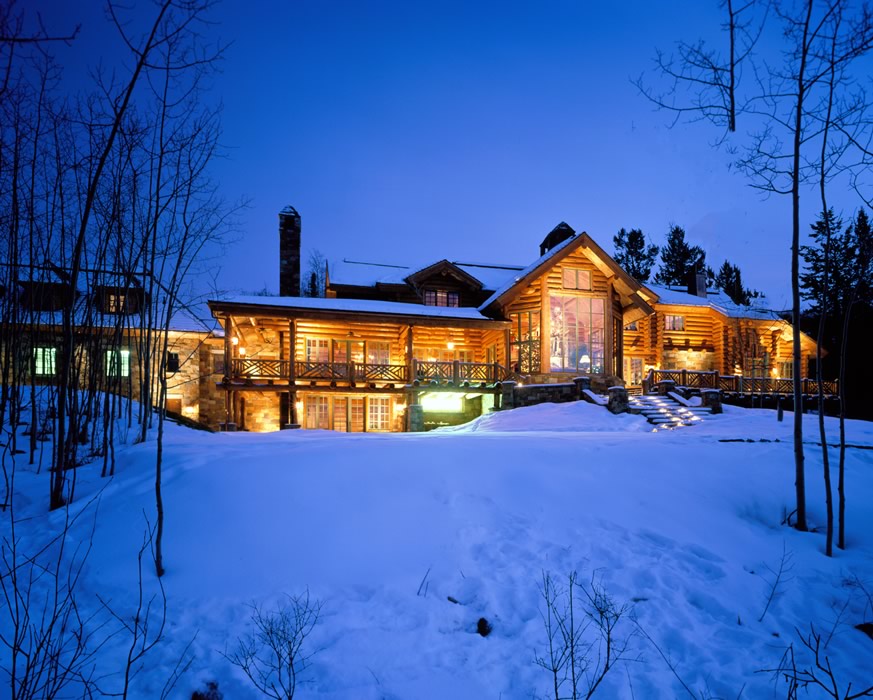
Yes — a log cabin still needs insulation, just not in the log walls themselves. Solid logs handle the wall assembly on their own, so cabin insulation work concentrates on the roof, the floor or crawlspace, any framed gable walls, and the joints between logs. Get those four right and a log home is as comfortable as anything stick-built.
Every cabin is a little different depending on the species and the wall profile, so the amount of cabin insulation required varies. Frontier Log Homes has built in Montrose, Colorado since 1977, at elevations where winter tests every detail, and this is how we approach it.
Where Cabin Insulation Goes in a Log Home
| Assembly | Insulation Needed? | What We Use |
|---|---|---|
| Solid log walls | No added insulation | The logs are the assembly; joints get sealant and chinking |
| Roof and attic | Yes — the biggest single gain | Rigid foam over the deck, or dense blown-in above the ceiling |
| Floor over crawlspace or basement | Yes | Rigid foam or spray foam at the rim and underside |
| Framed gable ends and dormers | Yes | Standard cavity insulation plus an air barrier |
| Log-to-log joints and corners | Yes, but as sealant | Gasket, backer rod, and chinking |
| Windows and doors | Yes | Foam-sealed jambs with settling space above |
How Log Walls Insulate on Their Own
Often the wood used in construction is all the wall needs. Logs provide insulation naturally, and they do something a framed wall cannot: they store heat. That combination is why cabin insulation planning starts by leaving the log walls alone.
What Is R-Value?
R-value measures how well a material resists heat flow. A higher number means better insulating performance per inch. Softwoods such as pine, cedar, spruce, and fir carry higher R-values per inch than dense hardwoods, which is one reason they dominate log home construction. Species choice matters enough that we wrote a full guide on the best type of wood for a log home.
Thermal Mass Does the Rest
A twelve-inch log wall does not have the R-value of a thick foam panel, yet log homes routinely outperform their numbers. The mass of the wood absorbs heat during the day and releases it at night, flattening indoor temperature swings. The U.S. Department of Energy’s insulation guidance covers how mass and R-value work together, and our page on energy efficiency and log homes explains what that means for a heating bill.
7 Places Cabin Insulation Actually Matters
Ranked by how much comfort each one buys. These are the seven cabin insulation targets we check on every build. The first two account for most of the difference between a cozy cabin and a drafty one.
1. The Roof and Attic
 Heat leaves through the top of the house, so this is where cabin insulation pays for itself fastest. Vaulted ceilings over exposed trusses usually get rigid foam above the roof deck; flat ceilings get deep blown-in insulation. Either way, ventilation above the insulation keeps ice dams off the eaves. No other cabin insulation upgrade returns as much comfort per dollar.
2. The Floor, Crawlspace, and Rim
Cold floors are the complaint we hear most, and the fix is almost always at the rim joist and the underside of the floor. Sealing and insulating a crawlspace, rather than venting it, works better in a dry mountain climate and keeps plumbing out of freeze range.
3. Corners, Cracks, and Edges
The corners where logs meet, plus the seams along each course, are where a log home loses air. Gaskets and sealant go in during construction, and chinking finishes the joint. Because logs shrink and settle for the first few years, plan on inspecting these joints; our notes on log home settling explain the timeline.
4. Framed Gable Ends and Dormers
Most log homes include some conventional framing above the log walls or around dormers. Those sections need the same cavity insulation and air barrier a stick-built house would get. Skipping them creates a cold spot right where warm air collects.
5. Windows and Doors
Openings in a log wall need a settling gap above the frame so the logs can move without pinching the unit. That gap gets a compressible insulation and trim that slides — never rigid foam packed tight and screwed solid.
6. Utility Penetrations
Every wire, pipe, dryer vent, and hose bib that passes through the shell is a potential leak. Foam or caulk each one. It takes an afternoon and it removes a surprising share of a cabin’s total air leakage, which is why we treat sealing as part of the cabin insulation scope rather than a separate task.
7. Ductwork and Mechanical Chases
Ducts that run through an unconditioned attic or crawlspace lose heat before it reaches the register. Keep them inside the insulated envelope where the layout allows, and seal and wrap them where it does not.
An Extra Layer: When to Add More
Some owners want more than the logs and the roof provide, especially at high elevation or in a home used year-round. Adding rigid foam above the roof deck, upgrading to triple-pane glass, or building an insulated interior partition wall behind kitchen cabinetry are all reasonable moves. Adding insulation to the inside face of a log wall is not — it covers the logs you paid for and traps moisture against the wood.
The other honest answer is that air sealing usually beats added cabin insulation dollar for dollar. A blower-door test after dry-in tells you exactly where the leaks are, and the repairs are cheap while the shell is still open.
Where Can Air Seep In?
Air finds the same handful of paths in nearly every cabin: the log corners, the seam between the log wall and the subfloor, the top course where the wall meets the roof, window and door perimeters, electrical boxes, and the chimney chase. Checking that list each spring takes an hour. Our spring maintenance checklist includes it alongside the other seasonal jobs.
Frequently Asked Questions About Cabin Insulation
Do log cabins need wall insulation to pass code?
Many jurisdictions allow log walls to comply through a mass-wall path or a whole-house energy trade-off rather than a straight R-value test. The rules come from the energy code your county adopts, published by the International Code Council, so confirm locally before drawing plans.
What R-value does a log wall have?
Roughly R-1.25 to R-1.4 per inch for common softwoods, so an eight-inch wall lands near R-10 to R-11 on paper. Thermal mass and tight joints are what make that number perform better in practice than it reads.
Is spray foam a good idea in a log home?
It is excellent at the rim joist, in framed gables, and under a roof deck. It is a poor choice against the inside face of a log wall, where it can hold moisture and prevent the logs from moving as they settle.
Are thicker logs worth the money for insulation?
Thicker logs add mass and a modest amount of R-value, and they look substantial. If the budget is limited, the same money spent on roof insulation and air sealing will lower your heating bill more.
How do I stop cold drafts in an older cabin?
Start with a smoke pencil or an infrared scan on a windy day. Nine times out of ten the culprit is failed chinking, an unsealed rim joist, or a window that was foamed rigid and has since shifted. Fix those before adding cabin insulation anywhere.
Does cabin insulation help in summer too?
Yes. Roof insulation and shading keep the upper floor livable in July, and the mass of the log walls keeps daytime heat from reaching the interior until evening. Our summer cooling guide covers the rest.
Build a Warm, Tight Log Home With Frontier Log Homes
Frontier Log Homes has cut, raised, and finished log homes from Montrose, Colorado since 1977. We detail cabin insulation, sealing, and settling allowances before the first log is placed, whether you order a shell or a finished house.
Browse our log cabin kits, compare a dry-in shell with a turn-key build, or contact us with questions about your climate zone.