
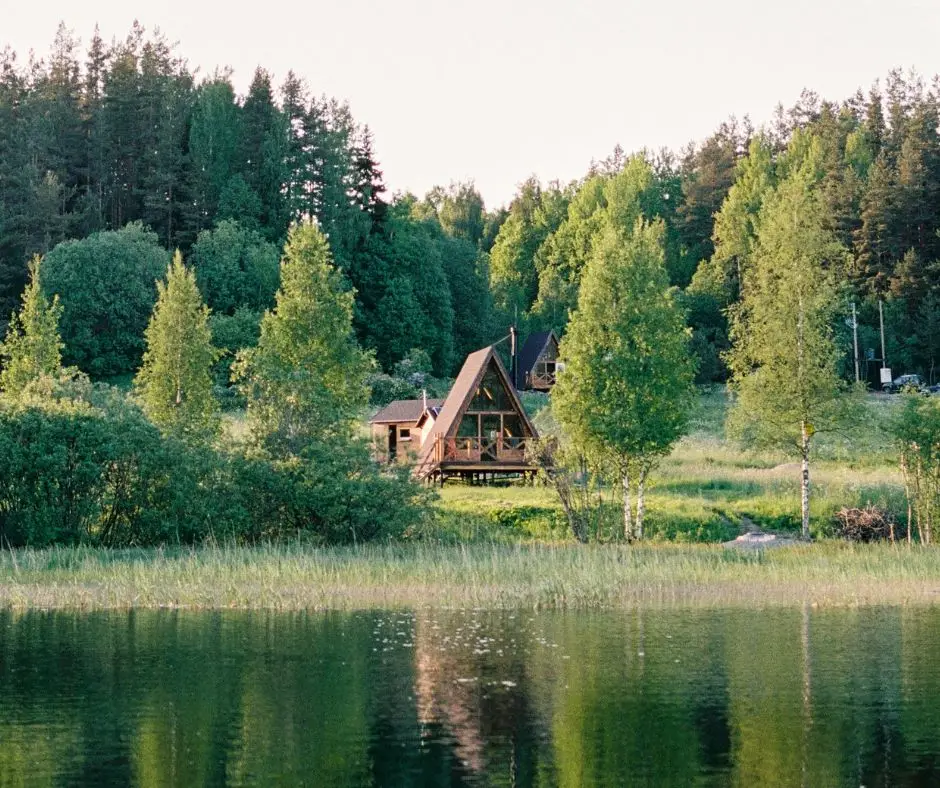
Low-maintenance cabin landscaping comes down to six things: mulch heavily, plant native species, water on demand instead of on a timer, choose slow-growing shrubs, simplify the mowing layout, and let wildflowers do the decorating. Two rules matter more than any of them at a log home: keep plants and mulch back from the log walls, and grade the ground so water runs away from the foundation. Frontier Log Homes has handcrafted log homes in Montrose, Colorado since 1977 and sees what bad cabin landscaping does to a log wall.
Cabin landscaping can take a lot of work. However, when done right, the land around your home looks amazing and still requires almost no effort.
6 Low-Maintenance Cabin Landscaping Ideas
Every idea below cuts recurring work. Start with the ones that solve a problem you already have.
1. Use a Lot of Mulch
Mulch, which is any natural material that coats the top layer of soil, has a lot of perks! If you want to use an inorganic material for mulch, you could try some small rocks and stones. On the other hand, organic materials like grass clippings, pine needles, or wood chips are also an option. Either way, mulch decreases the amounts of weeds that creep up between your plants. Also, mulch is a great way to help your plants thrive because it keeps the soil wet for a longer period of time (which means less watering for you!).
2. Plant Native Flora in Your Cabin Landscaping
By using native plants in your cabin landscaping, you are decreasing the amount of work you have to do. However, using these local plants can also help your log home feel even more connected to the nature surrounding it. This type of landscaping will also cut down on watering because they are already used to the local weather patterns.
3. Control the Water
Planting local flora can help keep you from having to water your plants every day, but there are also a lot of other ways to decrease the time and money put into watering! By investing in a sprinkler system that turns on due to soil moisture levels rather than a timer, you can conserve quite a bit of water. Another option is to set up a drip system that you can turn on and off to disperse the water at a steady pace.
4. Use Bushes and Shrubs
If you find some slow-growing bushes, you won’t have to worry about the constant trimming that comes with shrubbery. Shrubs add dimension to cabin landscaping around an already unique log home and prevent erosion if your home is built on a hill.
5. Design Cabin Landscaping That Is Easy to Mow
If you have a grassy yard, mowing and trimming can be a time-consuming task. Make it easier on yourself by trying to keep as much of the grass connected as possible. If you have a lot of different grass plots, it will be harder to move your mower from place to place. Also, if you want a stone or cobble walkway, try something that is embedded in the ground. It’s easier to trim and mow over a flat surface rather than over elevated cobbles.
6. Find Some Wildflowers
Sprinkling wildflower seeds and native grass seeds around your property can brighten up your home and help out important pollinators. Since the flowers and grasses look natural when untamed, you won’t have to worry about much upkeep.
The Cabin Landscaping Rule Most Owners Break
Keep everything back from the logs. Shrubs planted tight against a log wall hold moisture against the wood, block the airflow that dries it after rain, and give insects a shaded runway straight into the bottom courses. Mulch piled against the sill does the same thing, and it wicks ground moisture upward.
Leave a bare, well-drained strip at least 18 inches wide around the entire perimeter, and keep mulch several inches clear of any wood. This one habit does more for the life of your walls than any sealant schedule. Our guide to log home durability covers the other three things that shorten a log wall’s life, and carpenter bees and log homes explains why dense planting near the wall makes an infestation worse.
Grade the Ground Before You Plant Anything
Cabin landscaping that looks beautiful and drains badly is a foundation problem waiting to happen. The soil should fall away from the house roughly six inches over the first ten feet. Downspouts need to discharge well beyond that, not into a flower bed against the wall.
Swales, dry creek beds and rain gardens are all attractive ways to move water, and they double as landscape features. If your lot sheds a lot of water, read our guide to managing stormwater runoff before you shape any beds.
Cabin Landscaping and Wildfire Defensible Space
If your cabin sits in or near forest, landscaping is fire planning. The first five feet around the structure should be the least flammable zone on the property: gravel or stone instead of bark mulch, no shrubs against the walls, nothing stored under the deck. From five to thirty feet, break up continuous vegetation so a ground fire cannot ladder into the canopy or reach the building.
Firewood stacked against the cabin is the classic mistake, and it is also a moisture and insect problem. Move it at least thirty feet away and uphill of nothing. The Ready.gov wildfire preparedness guidance lays out the zones in detail, and many mountain counties now write them into code.
Cabin Landscaping That Waters Itself
Native and drought-adapted plants are the whole game. Once established, they run on whatever the local climate delivers. Group plants by water need so you are not irrigating a xeric bed to keep a thirsty one alive, and put anything that needs regular water on drip rather than spray. The EPA WaterSense program publishes regional guidance on efficient outdoor water use.
Cabin Landscaping FAQs
What is the lowest-maintenance landscaping for a log cabin?
Native plants over a thick mulch bed, a gravel perimeter strip against the walls, and as few separate grass plots as possible. That combination cuts watering, weeding and mowing at the same time.
How far should plants be from a log home?
At least 18 inches of clear, well-drained ground against the walls, and further in wildfire country, where five feet of non-combustible surface is the common recommendation. Shrubs that will grow wide need to be planted based on their mature size, not their nursery size.
Is mulch bad for a log cabin?
Mulch is excellent in beds and a problem against wood. Organic mulch holds moisture, which is the point in a garden and a hazard at a sill log. Keep it several inches back from any wood surface, and use gravel instead in the first few feet if you are in a fire-prone area.
What plants should I avoid near a log home?
Anything that grows dense against the wall, anything with aggressive roots near the foundation, and vines of any kind. Climbing vines trap moisture, pry at chinking and hide damage until it is severe.
Does landscaping affect log home insurance?
In wildfire-prone areas it increasingly does. Insurers inspect defensible space, and some require it. Our overview of insuring a log home covers what carriers look at.
When is the best time to start cabin landscaping?
After final grading and before the first winter, so the soil is shaped correctly and new plantings have a full season to establish. Doing it in the wrong order means digging up finished beds to fix drainage.
Ready to Build the Cabin to Go With It?
Great cabin landscaping makes a log home look like it grew where it stands. Frontier Log Homes handcrafts custom log homes and log home kits in Montrose, Colorado and delivers them throughout the United States. See what we build.