
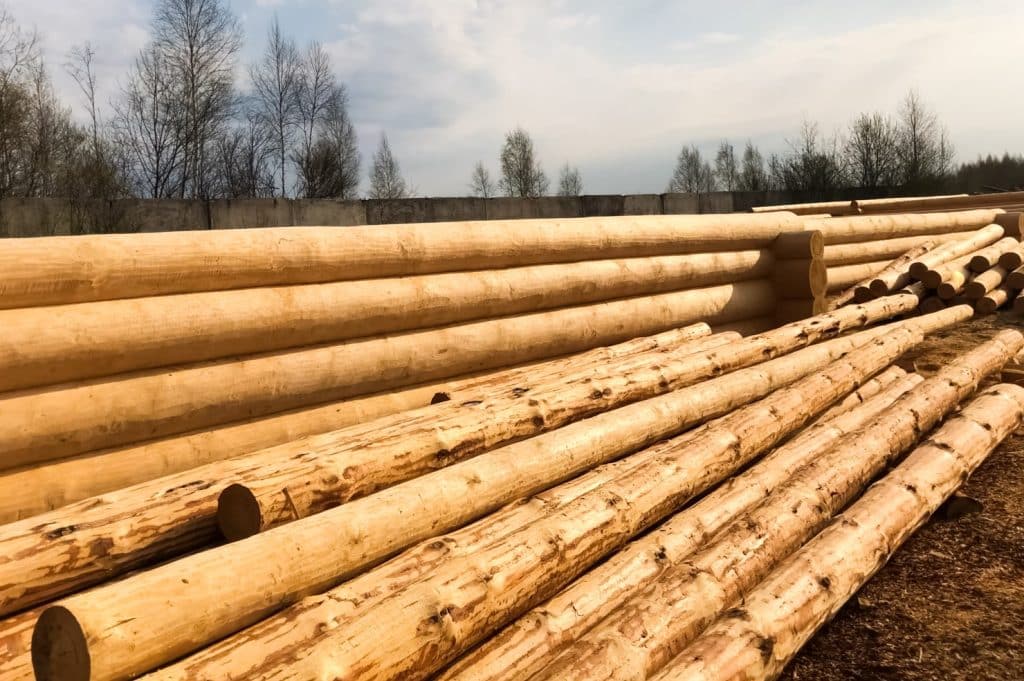
There is no single best type of wood for a log home: pine wins on cost and availability, cedar wins in wet or harsh climates, and how well the logs were dried matters more than species. Owners who obsess over species and ignore moisture content end up with cracking and warping in a premium wood. Below are the seven species actually used in American log homes, what each is good and bad at, and the criteria we use with clients. Frontier Log Homes has been handcrafting log homes in Montrose, Colorado since 1974.
When people build a conventional house they debate cabinet finishes and bathroom tile. Log home owners have one extra decision, and it is a structural one. There are more than 300 tree species in the United States, but only about seven are genuinely suited to sturdy log walls, so the search for the best type of wood is narrower than it first appears.
| Species | Cost | Decay and insect resistance | Shrinkage | Availability |
|---|---|---|---|---|
| Red pine | Low | Moderate with good upkeep | Higher | Excellent |
| White and yellow pine | Low to moderate | Better than red pine | Higher | Excellent |
| Cedar | High | Excellent, naturally | Low | Limited |
| Oak | High | Good | Moderate, must be dried well | Regional |
| Cypress | High | Very good | Low to moderate | Southeast only |
| Redwood | High | Excellent | Low | Very limited |
| Spruce and fir | Low | Poor without treatment | Moderate | Good |
The 7 Most Common Types of Wood for Log Homes
Below is what each species is genuinely good and bad at, so you can judge the best type of wood against your own site rather than a brochure.
Each species has real trade-offs. The best type of wood for your project is the one that matches your climate, your budget, and what is growing within a sensible haul of your site.
Pine
Pine is the most common building wood in the United States. Pines grow nearly everywhere, so you will find good pine logs near almost any location. Red pine is sturdy and stable and lasts generations when it is maintained against weather and insects. White and yellow pine resist decay somewhat better than red pine, and cost a little more. The drawback is that pine is a softwood and shrinks noticeably as it dries, so pine logs must be well dried and settled before installation or you will see cracking, shrinking, splitting, and warping.
Oak
Oak is a hardwood with more heartwood than sapwood. Like walnut or poplar it is very strong, and like most hardwoods it costs more than commodity species. It resists insects reasonably well and, like pine, must be thoroughly dried before it goes into a wall. Oak is the best type of wood for owners who want sheer density and are not paying to truck it across the country.
Cedar
Cedar resists moisture, insects, fungi, and general decay better than almost anything else, and it is scarcer than pine or oak. That famous scent comes from natural extractives in the heartwood that act as built-in deterrents to insects and fungi — the tree’s own preservative. Cedar is the best type of wood for harsh environments and extreme weather because it handles water so well, and its low shrinkage rate means less drying time and less risk of cracking and warping.
Spruce and Fir
Both are used in log homes and both are affordable. Neither resists decay, fungi, or insects well, so they must be treated before installation and then maintained conscientiously. If budget points you here, commit to the finish schedule in our exterior treatment guide.
Cypress
Cypress grows mainly in the Southeast and is not widely available, so expect to pay for it. It is prized for strength, stability, and resistance to insects and weather, and it is arguably the best type of wood available to owners building in the humid South.
Redwood
Redwood resists insects and decay and shrinks very little. It is less common than the others and northern California and southern Oregon are effectively the only sources, but its log-building qualities are excellent, and in its home range it is arguably the best type of wood money can buy.
How Do You Choose the Best Type of Wood?
If the species list feels overwhelming, work through these seven criteria in order. They will narrow it down quickly.
1. Decide What You Are Optimising For
What matters most to you: appearance, cost, strength, or insect resistance? Rank them honestly, because the best type of wood for a tight budget is not the best type of wood for a rainforest climate. If cost leads, go mainstream. If you are building where heavy snow and rain are normal, cedar or oak deserve a serious look.
2. Cost
Pine is the budget-friendly answer. Red, white, and yellow pine grow throughout the country, so quality logs are usually available locally. If cost is not the constraint, oak, cedar, and redwood open up. Availability near your site also drives the number: pine keeps transport cheap, while cypress, cedar, or oak may carry a haulage premium. Our cost breakdown shows where species sits in the overall budget.
3. Where Did the Logs Grow?
Trees from high altitude carry more heartwood than the same species grown low, which makes them stronger and more stable. Given the choice, take the high-altitude logs. Regionally, the East and Northeast have abundant white and red pine plus cedar. The Southeast grows white and yellow pine and is the place to find cypress. Central states have all the pines, cedar, oak, and hardwoods such as walnut. The West and Northwest grow pines, cedars, firs, and spruce. Pine turns up everywhere, which is exactly why it is the default.
4. How Old Is the Tree?
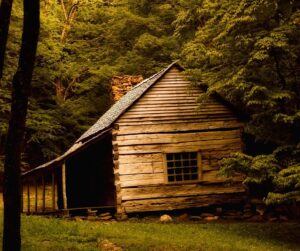
Age matters because older trees have more heartwood relative to sapwood, and heartwood is what carries a tree’s resistance to insects and moisture. More heartwood means a more stable, more durable log. Younger trees have not had time to build it. A great deal of log stock now comes from tree farms, and fast-grown farm timber is not the equal of a century-old tree that took its time. Research from the USDA Forest Products Laboratory on natural durability makes the heartwood point clearly.
5. Appearance
You may simply like how a wood looks. Cedar has a warm reddish tone, white oak reads darker than red oak, and yellow pine is exactly as yellow as it sounds. You can always stain a log home to a colour you want, but if you already picture a particular grain and hue, let that guide the choice.
6. Resilience to Insects, Moisture, and Fungi
Climate should probably outrank taste here. Persistent moisture, hard winters, and hot summers all argue for a naturally resistant species. Choose something vulnerable to fungi, decay, and insects and you have simply moved the cost into treatment, staining, and vigilance. See the real threats log homes face and carpenter bees.
7. How Were the Logs Dried?
This is the criterion that beats all the others, and it is the one buyers skip. Wood shrinks as it loses moisture, so green logs are guaranteed to move after installation. Some manufacturers air-dry for one to two years; others kiln-dry at low heat. Either is acceptable. What is not acceptable is fresh logs in a wall. Ask any builder directly how they dry, and for how long. Even the best type of wood will crack, split, and warp if it went up wet, and the driest average pine will outperform a wet premium species.
Other Things to Keep in Mind
Beyond species, a few things decide whether your logs stay sound for decades when building your log home.
Quality of Assembly
Assembly quality is the clearest evidence of a builder’s craftsmanship. Careful fitting minimises shrinkage and warping and respects each log. We build handcrafted, chink-style homes from dry logs and let the wood compress naturally through the first year: no screw jacks, no settling problems, no drywall cracks.
Astute Design
We design in wide roof overhangs and generous porches. The less your exterior logs are exposed to rain and sun, the less log home maintenance you will ever do. Design shelters wood more effectively than any product you can brush on.
Winter Logs
The best time to fell timber is winter, when sap content is at its lowest. Less sap means less moisture to remove. Ask your builder what time of year they cut; winter-felled logs of an ordinary species often outperform summer-felled logs of the best type of wood.
Use the Heartwood
You want walls built from the heartwood at the centre of the tree, its strongest, densest part, rather than the sapwood nearer the bark. This is why log diameter and tree age are related questions, and why the best type of wood in a small-diameter log may still disappoint.
Best Type of Wood: Questions Owners Ask
What is the single best type of wood for a log home?
If we had to answer in one word for most of the country: pine, properly dried, from high-altitude stock. It is available, affordable, strong enough, and it takes a finish beautifully, which is why it remains the default best type of wood across most of the country. Cedar is the better answer in genuinely wet or harsh climates if the budget allows.
Are hardwoods better than softwoods for log walls?
Not necessarily. Hardwoods are denser and stronger, but softwoods insulate slightly better per inch and are easier to work and dry. Most American log homes are softwood for good practical reasons. Our note on the R-value of wood covers the insulation side.
Does species affect how often I stain?
Yes, at the margin. Cedar and redwood tolerate exposure longer, while spruce and fir need earlier and more diligent attention. Orientation and overhangs still matter more than species; see staining intervals.
Should I worry about where the logs are harvested?
It is worth asking. Responsible suppliers work from well-managed forests, replant, and use as much of each log as possible. Our approach is described in eco-friendly log homes, and the NAHB Log Homes Council publishes buyer guidance on the same subject.
Is kiln-dried better than air-dried?
Both work when done properly. Kiln drying is faster and more uniform; air drying is gentler and takes one to two years. What matters is the moisture content when the log goes into the wall, not the method used to get there.
Can I mix species in one house?
Yes, and it is common. Cedar or a naturally durable species at the lowest courses and exposed elevations, pine elsewhere, is a sensible way to spend money where the weather actually lands.
The Best Type of Wood for Your Log Home
Log homes keep gaining ground because they are a cost-effective, energy-efficient way to build something that lasts. Choose the best type of wood for your climate and budget, insist on properly dried logs, and let the design shelter the wood.
Frontier Log Homes has handcrafted log homes in Montrose, Colorado since 1974 and has built more than 800 of them. Contact Frontier Log Homes or call 970-249-7130 and we will tell you honestly which wood makes sense for your site.